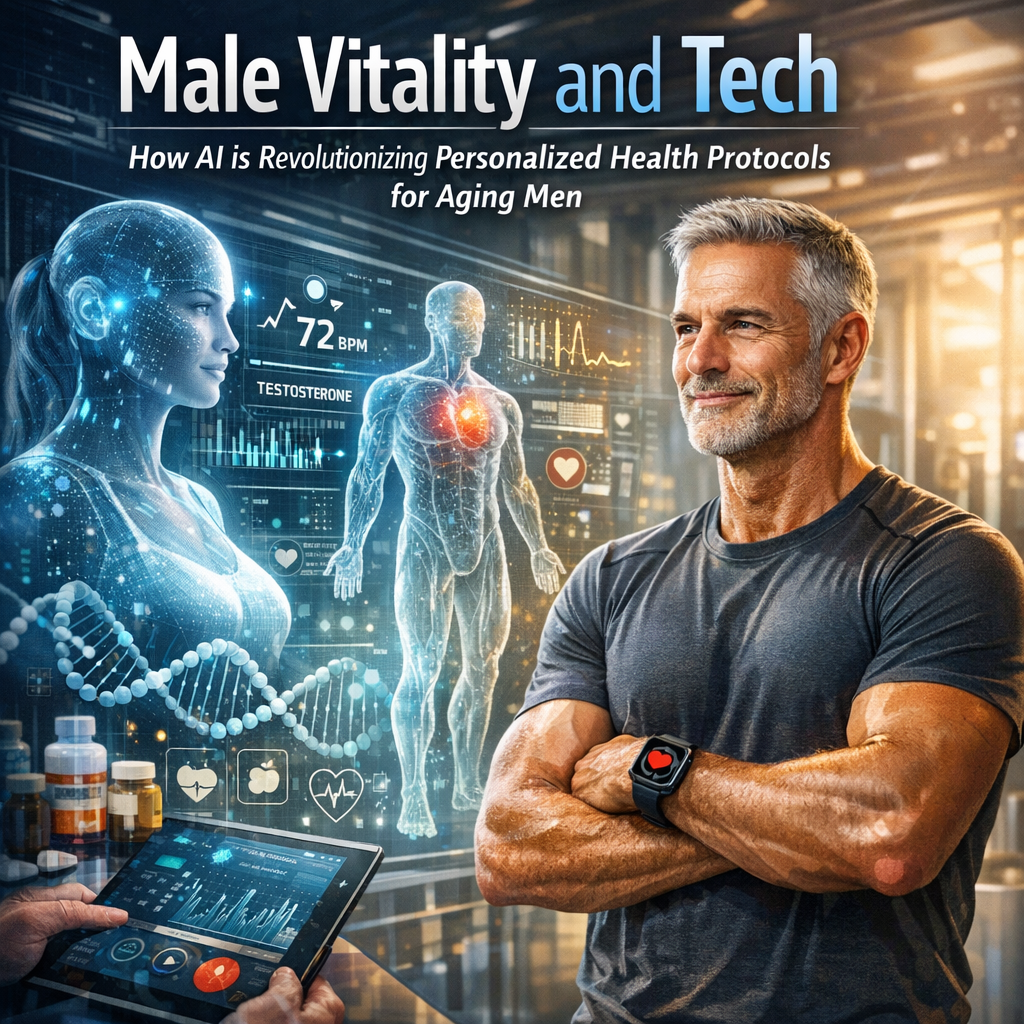
Male Vitality and Tech: How AI is Revolutionizing Personalized Health Protocols for Aging Men
Introduction
In recent years, the field of healthcare has undergone a dramatic transformation, powered by the advent of **artificial intelligence (AI)**. This technological shift is particularly significant in **personalized health protocols** for aging men, who face unique challenges in maintaining **vitality** and overall well-being. From managing **chronic conditions** to optimizing **nutrition** and **exercise** regimens, AI is becoming an invaluable tool for tailoring healthcare strategies to individual needs. As men age, they encounter a variety of physiological changes that can impact their **physical** and **mental health**. Conditions such as **cardiovascular disease**, **diabetes**, and diminishing **testosterone** levels become more prevalent, necessitating a personalized approach to health management.
The integration of AI in healthcare offers the promise of unprecedented customization. Through sophisticated data analysis, AI can process vast amounts of information from wearable devices, electronic health records, and even genetic data. This capability allows healthcare providers to create personalized health protocols that adapt to the unique biological and lifestyle factors of each individual. The implications extend far beyond traditional healthcare practices, offering a proactive approach to male vitality.
Moreover, AI is not just limited to data analysis but is also transforming the way healthcare is delivered. Virtual health assistants and telemedicine platforms utilize AI algorithms to provide real-time health monitoring and advice, making healthcare more accessible than ever. This technological revolution holds the potential to empower men from their teens to their 90s to take control of their health and make informed decisions about their well-being.
The intersection of male vitality and technology is an exciting frontier. The potential for AI to revolutionize personalized health protocols is vast, offering solutions that are not only reactive but preventative. By embracing these advancements, men can maintain their vitality and quality of life, regardless of age.
Features
Recent studies have begun to validate the potential of AI in personalizing health protocols, particularly for aging men. One such study involves the use of **machine learning algorithms** to predict and manage chronic diseases prevalent in older adults. A landmark study published in Nature Medicine demonstrated how AI can accurately diagnose conditions such as **cardiac arrhythmias**, **hypertension**, and diabetes earlier than conventional methods. The algorithm’s ability to analyze patterns in heart rate data collected from wearable devices has led to early intervention strategies that can significantly improve outcomes for men prone to such conditions.
Another notable area is the application of AI in understanding **genetic predispositions**. **Precision medicine**, which tailors healthcare based on individual genetic profiles, is becoming more feasible with AI advancements. The All of Us Research Program, led by the National Institutes of Health, is utilizing AI to analyze genetic data from a diverse cohort of participants, including men across various age groups. The goal is to identify genetic markers associated with age-related diseases and create preventive strategies that can be personalized to individuals based on their genetic makeup.
AI is also reshaping nutritional guidance and fitness regimes tailored for aging men. Platforms like **Nutrigenomix** use AI to analyze genetic information and provide personalized diet recommendations that can help manage weight, enhance energy levels, and improve overall vitality. These AI-driven insights empower men to make informed dietary choices that align with their health goals, contributing to longer and healthier lives. More information can be found on the Nutrigenomix website.
Finally, **mental health**, a critical component of male vitality, is also benefiting from AI innovations. AI-driven chatbots and virtual therapists offer support and resources for mental well-being, helping to break down the stigma associated with seeking help. Studies have shown that these AI tools can effectively reduce symptoms of anxiety and depression, which are common among aging men, as detailed in a study published in the Journal of Medical Internet Research.
Conclusion
In conclusion, the role of AI in revolutionizing personalized health protocols for aging men is proving to be transformative. The capability of AI to analyze and interpret complex health data allows for tailored approaches that address the unique needs of each individual. By focusing on critical areas such as chronic disease management, genetic predispositions, nutrition, fitness, and mental health, AI is paving the way for a new era of male vitality. This approach not only facilitates reactive healthcare but also prioritizes prevention, empowering men to maintain their quality of life well into their golden years. As technology continues to advance, the potential for AI-driven healthcare to extend and enhance the lives of men across all ages remains limitless. Embracing these advancements ensures a future where aging gracefully is not just a possibility but a reality.
**Concise Summary**
AI is revolutionizing personalized health protocols for aging men by offering tailored healthcare strategies. From managing chronic diseases to enhancing nutrition and fitness regimes, AI enables healthcare providers to interpret complex data for individualized solutions. Notably, AI aids in early diagnosis, leveraging machine learning and genetic data analysis to predict and prevent age-related health issues. Platforms like telemedicine provide real-time health guidance, while AI-driven chatbots support mental well-being. The integration of AI into healthcare promotes proactive and preventative practices, empowering men across all ages to maintain vitality and enhance their quality of life.

Dominic E. is a passionate filmmaker navigating the exciting intersection of art and science. By day, he delves into the complexities of the human body as a full-time medical writer, meticulously translating intricate medical concepts into accessible and engaging narratives. By night, he explores the boundless realm of cinematic storytelling, crafting narratives that evoke emotion and challenge perspectives. Film Student and Full-time Medical Writer for ContentVendor.com