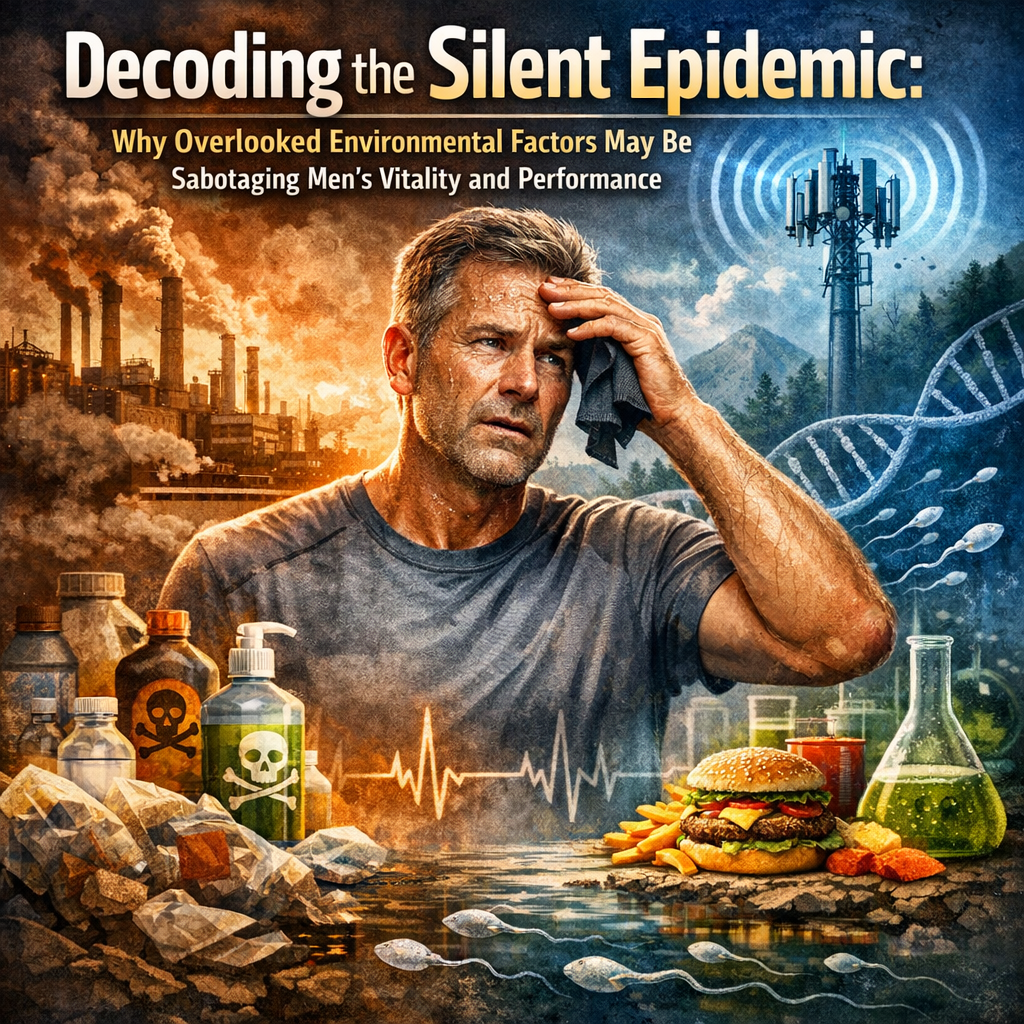
Decoding the Silent Epidemic: Why Overlooked Environmental Factors May Be Sabotaging Men’s Vitality and Performance
In the journey toward optimal **health** and **performance**, men often focus on tried-and-true factors like **diet**, **exercise**, and **mental health**. While these elements are undeniably important, there is a potent, often overlooked realm that significantly impacts men’s **vitality**—**environmental factors**. What if the very air you breathe and water you drink played a critical role in steering your body’s health and performance? In today’s fast-paced world, where **pollution levels** are rising and the use of artificial substances is rampant, it’s time to unmask these silent saboteurs hidden within our environment.
The term “environmental factors” encompasses a wide array of influences, ranging from **air** and **water pollution** to chemical exposure and lifestyle habits triggered by technological advances. For instance, **endocrine-disrupting chemicals (EDCs)** such as **bisphenol A (BPA)** and **phthalates** are found ubiquitously—in plastic containers, canned goods, and even household dust. These substances can interfere with hormonal function, potentially contributing to issues like reduced testosterone levels, diminished sexual performance, and lowered fertility rates in men. According to a [study published by the National Institute of Environmental Health Sciences](https://www.niehs.nih.gov/research/programs/endocrine/index.cfm), EDCs pose a significant risk to male reproductive health by mimicking or obstructing natural hormones in the body.
Another surprising environmental factor linked to men’s health is the quality of indoor and outdoor air. Pollutants like particulate matter, nitrogen dioxide, and volatile organic compounds (**VOCs**) can exacerbate respiratory conditions, increase oxidative stress, and even affect cardiovascular health. Research conducted by the [World Health Organization](https://www.who.int/news-room/air-pollution) indicates that air pollution is a major contributor to mortality rates worldwide, significantly affecting men, who are typically more prone to outdoor work environments. Moreover, noise pollution, an often-overlooked factor, also plays a crucial role. Prolonged exposure to high noise levels has been associated with elevated stress, increased **blood pressure**, and sleep disturbances, all of which can lead to decreased performance and overall vitality.
Furthermore, the modern-age lifestyle, increasingly dominated by digital screens, blue light exposure, and sedentary behavior in urban settings, presents a unique set of challenges. A study in the [Journal of Clinical Endocrinology & Metabolism](https://academic.oup.com/jcem) highlights that the circadian rhythm, critical for regulating sleep and bodily functions, can be severely disrupted by excessive blue light exposure, leading to fatigue, mood disorders, and reduced cognitive functions in men.
Features: Key Studies Indicating Environmental Impact
Over recent years, a growing body of scientific research has illuminated the tangible impact of environmental factors on men’s health and performance. A notable study by the [Environmental Working Group](https://www.ewg.org/) pointed out a staggering correlation between **chemical pollutants** and reproductive health disorders. The research revealed that a significant percentage of men had measurable levels of phthalates in their bodies associated with decreased sperm quality. This finding underscores the pervasive infiltration of chemicals into our daily lives and their potential to meddle with the intricate mechanisms of the human body.
**Nutrition-related environmental factors** cannot be ignored either. A report from [Harvard Health Publishing](https://www.health.harvard.edu/) discusses the impact of pesticide residues found in conventionally grown produce, emphasizing their potential role in hormonal disruptions. This aligns with other findings suggesting that men who consume high levels of produce treated with pesticides could face an increased risk of fertility issues.
Diving into the realm of air quality, a comprehensive study by the [American Heart Association](https://www.ahajournals.org/) concluded that long-term exposure to air pollution increases the risk of cardiovascular diseases in men. This research underscored a troubling link between poor air quality and elevated rates of heart attacks and strokes, indicating that the air one breathes could be as critical as what one eats regarding heart health.
Moreover, the psychological effects of environmental factors are similarly profound. The presence of **natural environments** and green spaces has been documented by the [Proceedings of the National Academy of Sciences](https://www.pnas.org/) to significantly alleviate stress levels and improve cognitive function, highlighting the necessity of integrating nature into urban planning to mitigate stress-induced health consequences.
Conclusion: Taking Charge of Your Environment
Understanding the profound influence of environmental factors on men’s vitality is a crucial step toward empowering health-conscious decisions. By acknowledging and addressing these external stressors, men can pave the way toward improved performance and a healthier life. Practical steps, such as opting for organic or locally-sourced foods, minimizing exposure to synthetic materials, and prioritizing time spent in natural settings, can effectively counteract some adverse effects. Furthermore, advocating for cleaner air initiatives and supporting policies that reduce environmental pollution are collective actions with ripple effects on population health.
It’s essential for men to navigate today’s environmental complexities with awareness and purpose, crafting a lifestyle that shields against harmful exposures. By doing so, men across the lifespan—from teens to those in their 90s—can sustain their vitality and optimize their performance, even amidst the silent threats of modern living.
**Concise Summary**
Environmental factors such as air and water pollution, chemical exposure, and modern lifestyle habits play a significant role in men’s health, affecting vitality and performance. Compounds like endocrine-disrupting chemicals and pollutants can disrupt hormonal and cardiovascular health. Studies uncover links between environmental toxins and reproductive issues, cognitive declines, and stress-related health consequences. Men should address these risks through informed choices like consuming organic foods, limiting synthetic material exposure, and advocating for cleaner environments. Enhancing men’s health involves understanding and mitigating these pervasive environmental threats.

Dominic E. is a passionate filmmaker navigating the exciting intersection of art and science. By day, he delves into the complexities of the human body as a full-time medical writer, meticulously translating intricate medical concepts into accessible and engaging narratives. By night, he explores the boundless realm of cinematic storytelling, crafting narratives that evoke emotion and challenge perspectives. Film Student and Full-time Medical Writer for ContentVendor.com