**
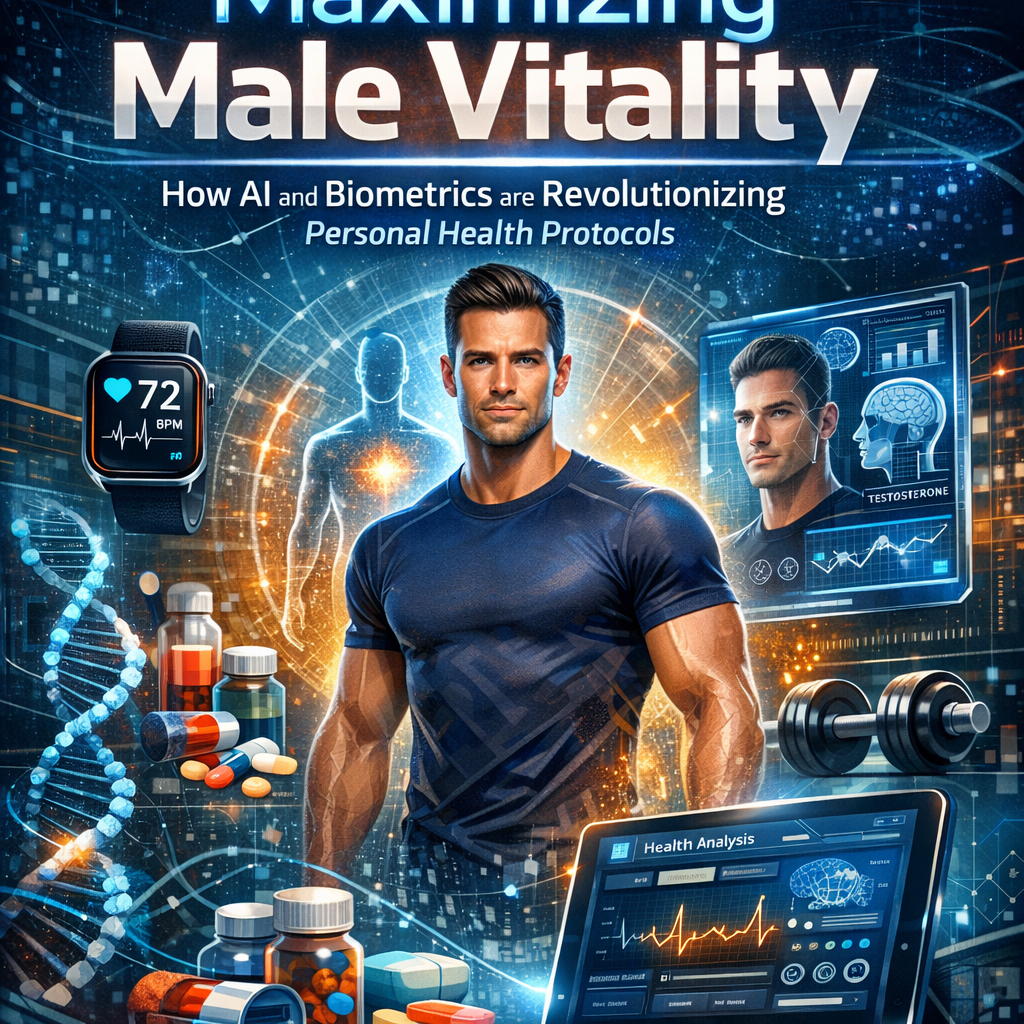
Maximizing Male Vitality: How AI and Biometrics are Revolutionizing Personal Health Protocols
**
**Introduction**
In the dynamic landscape of health and wellness, the quest for **optimal vitality** is timeless, and men across all age groups—from teenage years to nonagenarians—are embracing new horizons to enhance their **well-being**. Technological advancements, particularly in **artificial intelligence (AI)** and **biometrics**, are pivotal in revolutionizing personal health protocols. These tools are providing insights into individual health metrics and offering personalized solutions to maximize male vitality. With their capacity to adapt to new health data continuously, they empower individuals to take proactive control of their health like never before.
**AI** and biometrics work synergistically to analyze vast amounts of health data efficiently. AI algorithms, equipped with *machine learning* capabilities, can quickly process information that would take humans months or even years to interpret. Whether it’s through **wearables** that track vital signs in real-time or AI platforms providing personalized fitness regimes, these technological advancements are reshaping how men approach their health.
Biometric tracking offers a window into the nuances of individual health, capturing everything from **heart rate variability** to **sleep patterns**. With this data, AI systems can predict potential health issues and recommend preventive measures long before symptoms manifest. This proactive approach ensures that men not only live longer but also enjoy improved quality of life. For instance, platforms that merge AI with biometrics suggest personalized dietary changes, fitness plans, and mental wellness practices tailored to an individual’s unique genetic and lifestyle profile.
As men navigate various life stages, maintaining vitality becomes about more than just staying physically fit. **Emotional resilience**, **cognitive sharpness**, and holistic health are equally important. AI-driven technologies are addressing these areas by offering tools catering to mental health monitoring and cognitive training, transforming traditional health paradigms into integrative well-being models. By leveraging the power of AI and biometrics, men can achieve balance and vitality tailored to their specific needs, ensuring they remain at the peak of health throughout their lives.
**
Features
**
The application of AI and biometrics in personal health protocols is not just a futuristic idea but a present-day reality backed by several professional and medical studies. For instance, a 2021 study published in the [**Journal of Medical Internet Research**](https://www.jmir.org/2021/1/e20229/) explored how AI and wearable technology considerably enhance health outcomes by promoting disease prevention and encouraging long-term healthy behavior changes. The study found that individuals who used AI-driven health applications in tandem with biometric feedback experienced notable improvements in their physical and mental health profiles.
Moreover, research highlighted by the [**American Heart Association**](https://www.ahajournals.org/journal/circ) has shown that AI can accurately predict cardiovascular issues earlier than traditional methods. These algorithms analyze patterns, such as subtle changes in **heartbeat patterns** or **blood pressure** over time, helping to prevent critical events like heart attacks or strokes through timely lifestyle interventions.
On the biometric front, a comprehensive study in [**The Lancet Digital Health**](https://www.thelancet.com/journals/landig) examined how biometric monitoring devices like smartwatches can track and analyze sleep quality, activity levels, and calorie expenditure. The study demonstrated that the continuous feedback loop created by such devices encourages users to engage more actively in their health management, fostering a preventative approach rather than a reactive one.
Additionally, groundbreaking initiatives like the [**All of Us Research Program**](https://allofus.nih.gov/) by the National Institutes of Health aim to gather biometric data from one million or more people in the United States. The goal is to create a comprehensive resource platform that can enhance AI algorithms, ensuring personal health recommendations are not only precise but also inclusive of diverse genetic backgrounds.
These innovations reinforce a trend towards **precision medicine**—a model of healthcare that tailors treatment and wellness protocols to individual variability in genes, environment, and lifestyle. By integrating AI and biometrics into daily health routines, the possibility of personalized health strategies becomes accessible to men of all ages, addressing specific health challenges that may arise at different life stages.
**
Conclusion
**
The intersection of AI and biometrics represents a transformative shift in personal health protocols, especially for men seeking to optimize their physical, emotional, and cognitive well-being. These **technologies** facilitate a move from generalized healthcare to precision, offering personalized insights and strategies tailored to individual profiles. As men from teenage years into their 90s leverage these advancements, they gain the benefit of improved health monitoring and preventative strategies, fostering longevity and a higher quality of life. Embracing AI and biometrics is about aligning with a future where health is proactive, personalized, and dynamic. As the fields of AI and biometrics continue to evolve, they promise to open new frontiers in male vitality, making the prospect of healthier living more achievable and sustainable for generations to come.
**References**
1. [Journal of Medical Internet Research: Wearable Devices and Implementation of AI in Personal Health Monitoring](https://www.jmir.org/2021/1/e20229/)
2. [American Heart Association: AI Algorithms in Cardiovascular Health Prediction](https://www.ahajournals.org/journal/circ)
3. [The Lancet Digital Health: Biometric Monitoring and Health Engagement](https://www.thelancet.com/journals/landig)
4. [National Institutes of Health: All of Us Research Program](https://allofus.nih.gov/)
**Concise Summary**
The article explores how AI and biometrics are transforming male health protocols by providing personalized insights into physical, emotional, and cognitive well-being. AI algorithms analyze biometric data for proactive health management, predicting potential issues before symptoms appear. This integration encourages preventive health strategies, fosters emotional resilience, and supports cognitive training. Studies show AI improves health outcomes by promoting longevity and enhancing quality of life. Current innovations align with precision medicine trends, offering individualized wellness strategies that adapt to genetic diversity, lifestyle, and environmental factors, making personalized healthcare accessible for men at every life stage.

Dominic E. is a passionate filmmaker navigating the exciting intersection of art and science. By day, he delves into the complexities of the human body as a full-time medical writer, meticulously translating intricate medical concepts into accessible and engaging narratives. By night, he explores the boundless realm of cinematic storytelling, crafting narratives that evoke emotion and challenge perspectives. Film Student and Full-time Medical Writer for ContentVendor.com