Unveiling the ‘Testosterone Shadow’: How Environmental Toxins Are Sabotaging Men’s Hormonal Health
Introduction
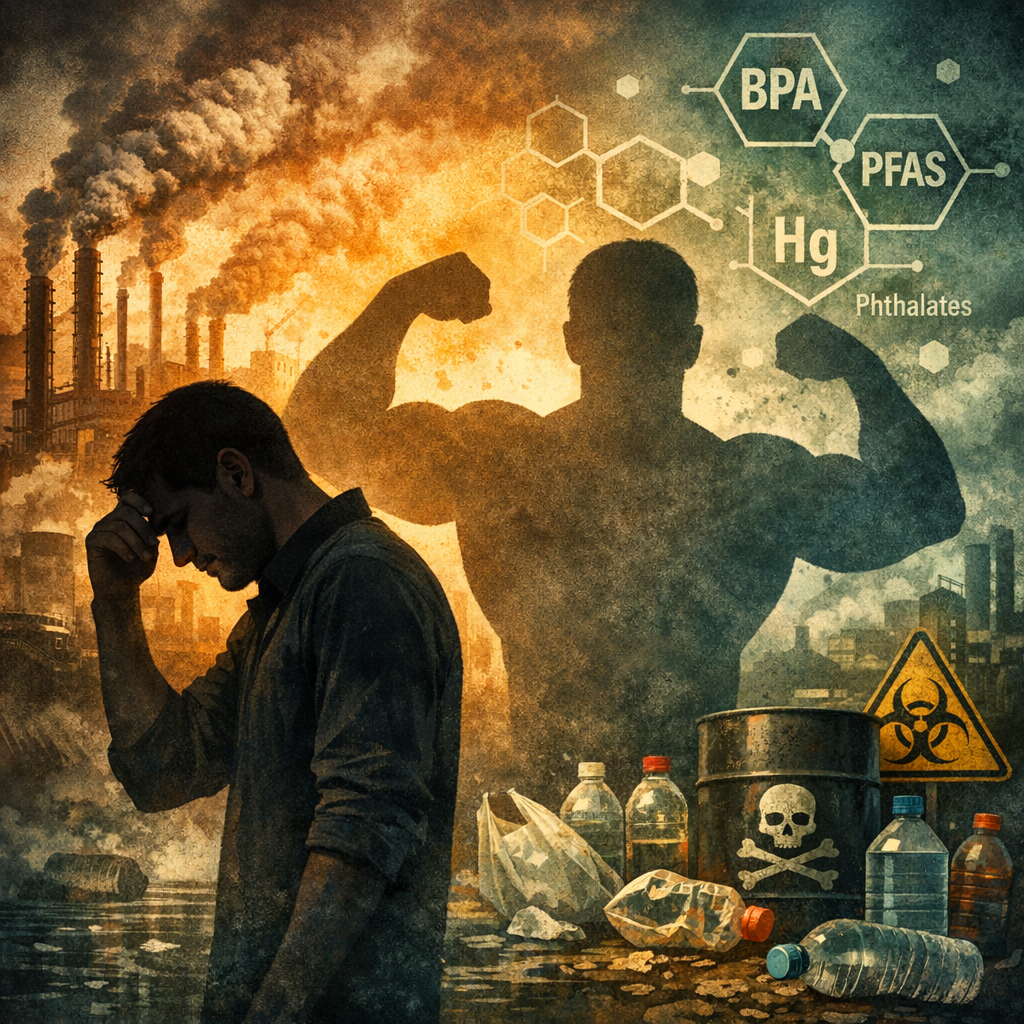
In recent years, a growing body of research has begun to unravel the complexities of how our **environment** affects **hormonal health**, specifically regarding **testosterone levels** in men. Dubbed the “**Testosterone Shadow**,” this phenomenon highlights how certain **environmental toxins** might be stealthily undermining men’s hormonal balance. For decades, **testosterone** has been heralded not just as the key hormone driving male sexual health, but also as a crucial element in maintaining **bone density**, **muscle mass**, and overall well-being. However, concern is mounting as evidence suggests that environmental factors may be playing a more significant role in testosterone decline than previously understood.
Generally, testosterone levels naturally decrease with age. However, recent studies indicate that the decline may start earlier and be more pronounced due to exposure to specific environmental toxins. These toxins are pervasive, found in everything from the **food** we consume to the **air we breathe** and the **products** we use daily. Chemicals such as **phthalates**, **bisphenol A (BPA)**, and **heavy metals** are known **endocrine disruptors**, mimicking or blocking hormones and wreaking havoc on the body’s natural hormone production.
For men residing in technology-driven societies like the **United States**, this issue is of particular concern. The combination of different pollutants in urban environments and the ubiquitous presence of **plastics** and synthetic materials contribute significantly to this issue. The consequences are not just hormonal imbalances but a ripple effect potentially affecting **mood**, **energy levels**, **fertility**, and more. Understanding these relationships requires both awareness and action—shielding oneself from these toxins and advocating for policies and practices that reduce their prevalence.
The importance of tackling this subject is clear: addressing these environmental factors can have significant health implications for a wide age range of men, from teenagers to those in their 90s. Thus, exploring exactly how these toxins impact hormonal health and what can be done to mitigate their effects is essential not only for personal health but also for public **health policy**.
Features
Scientific exploration into how environmental toxins affect testosterone levels has accelerated over the past decade. Many studies focus on the implications of **endocrine-disrupting chemicals (EDCs)**. The **National Institute of Environmental Health Sciences** defines EDCs as chemicals that can interfere with the endocrine systems at certain doses, leading to adverse developmental, reproductive, neurological, and immune effects.
A study published in the journal [*Environmental Health Perspectives*](https://ehp.niehs.nih.gov/doi/10.1289/ehp.133a364) explored the impact of **phthalates**, a group of chemicals often used as plasticizers, on testosterone levels. The researchers found a significant association between phthalate exposure and decreased testosterone levels in men, particularly older males. Phthalates are commonly found in products ranging from personal care items to food packaging, illustrating just how routine exposure is.
**Bisphenol A (BPA)** is another chemical that has drawn scrutiny. Originally used to make plastic resilient and clear, BPA easily leaches into food and beverages from containers made with the substance. A study from the [*Journal of Clinical Endocrinology & Metabolism*](https://academic.oup.com/jcem/article/96/9/2930/2834983) showed that BPA exposure is linked to low testosterone. As a ubiquitous compound, reducing exposure is challenging, requiring a conscious effort to choose **BPA-free products**.
**Mercury**, **lead**, and other **heavy metals** persist despite stringent regulation due to industrial activities. These metals have been linked to hormonal imbalance, as shown in a study reported by the [National Institutes of Health](https://pubmed.ncbi.nlm.nih.gov/25231624/), which indicated that exposure to these heavy metals could modify hormone activity and reduce testosterone levels in men.
An interdisciplinary approach combining medical research and environmental science continues to uncover the precise mechanisms through which these toxins affect hormonal health. The broader scientific consensus encourages men to be proactive—utilizing strategies like reducing plastic use, choosing **organic produce**, and advocating for stronger regulatory practices to shield themselves from hormonally disruptive environmental toxins.
Conclusion
With these revelations, it becomes evident that environmental toxins have a hidden yet profound impact on men’s hormonal health. The “Testosterone Shadow” isn’t just a metaphorical concept but a representation of the veiled threats posed by modern living. For the male population, from teen years to their 90s, acknowledging and addressing these threats can drastically improve quality of life and safeguard against long-term health risks.
Understanding the science behind these disruptions and advocating for changes can collectively lead us to a healthier future. Men should take action by using consumer power to demand safer products and calling for policy changes that regulate the use and disposal of harmful substances. Moreover, maintaining regular health check-ups can offer early detection of hormonal imbalances, allowing for timely intervention.
Ultimately, addressing the environmental impacts on testosterone will require both individual and collective action. By taking deliberate steps today, there is hope to transcend the testosterone shadow and foster an environment conducive to healthy hormonal balance for future generations to come.
**References**
– [National Institute of Environmental Health Sciences: Endocrine Disruptors](https://www.niehs.nih.gov/health/topics/agents/endocrine/index.cfm)
– [Environmental Health Perspectives: Phthalate Exposure and Decreased Testosterone](https://ehp.niehs.nih.gov/doi/10.1289/ehp.133a364)
– [Journal of Clinical Endocrinology & Metabolism: BPA and Hormonal Disruption](https://academic.oup.com/jcem/article/96/9/2930/2834983)
– [National Institutes of Health: Heavy Metals and Hormonal Health](https://pubmed.ncbi.nlm.nih.gov/25231624/)
**Concise Summary**
The “Testosterone Shadow” refers to how environmental toxins impair men’s hormonal health by reducing testosterone levels. Many toxins, including **phthalates**, **BPA**, and **heavy metals**, have been identified as endocrine disruptors that interfere with hormone production. These substances are pervasive in food, air, and consumer products, particularly impacting those in urban settings and tech-driven societies. Men should reduce exposure by avoiding plastics, choosing organic foods, and advocating for stronger regulations. Addressing these environmental impacts is critical for improving men’s life quality across ages and safeguarding long-term health.

Dominic E. is a passionate filmmaker navigating the exciting intersection of art and science. By day, he delves into the complexities of the human body as a full-time medical writer, meticulously translating intricate medical concepts into accessible and engaging narratives. By night, he explores the boundless realm of cinematic storytelling, crafting narratives that evoke emotion and challenge perspectives. Film Student and Full-time Medical Writer for ContentVendor.com