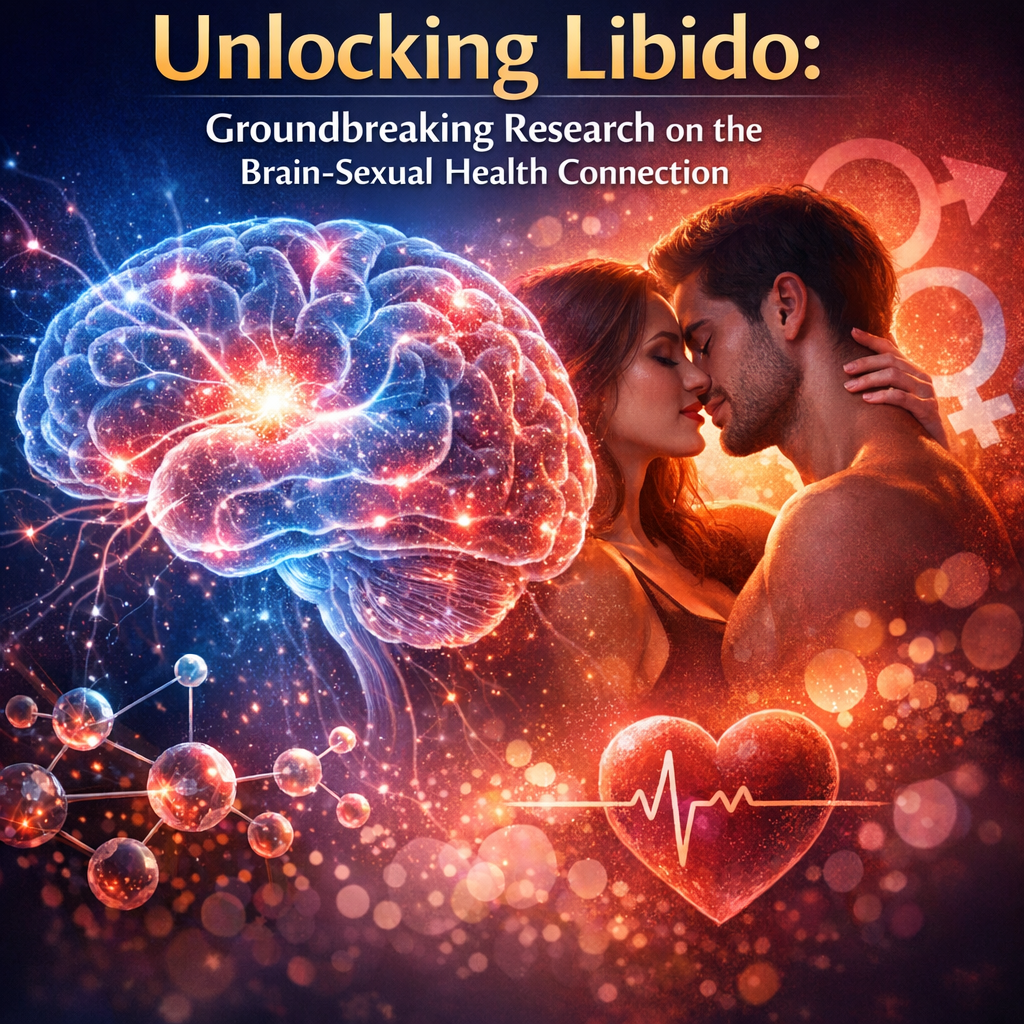
Unlocking Libido: Groundbreaking Research on the Brain-Sexual Health Connection
Introduction
Understanding the complex interplay between the **brain** and **sexual health** is pivotal for unlocking the mysteries behind **libido**, particularly for men from their teenage years to their nineties. Recent decades have seen a surge in interest in how the brain regulates sexual desire and performance, thanks to advances in **neuroscience** and increased openness in discussing sexual wellness. **Libido**, or sexual drive, goes beyond hormonal fluctuations; it is intricately connected to cognitive and emotional processes housed in the brain. This realization has turned the scientific community’s focus toward understanding **neural pathways**, **neurotransmitter impacts**, and psychological components related to sexual interest and drive.
Traditional views have isolated sexual health as merely a physical or hormonal phenomenon, often neglecting the central role of the brain. Modern research illuminates how **mental health**, **stress levels**, and even overlooked aspects like **sleep** and **diet** can influence sexual health. For instance, stress-related chemicals like **cortisol** can inversely affect **testosterone production**, leading to decreased libido if unchecked. Psychological conditions like **depression** and **anxiety** are closely linked to libido, with their origins and effects deeply rooted in brain function.
This emerging field underscores the need for a holistic approach when addressing issues of sexual health among men. The confluence of neuroscience and medical research has opened new avenues for therapies and interventions targeted at enhancing male libido by focusing on brain health. This article delves into contemporary findings that illuminate this brain-sexual health connection and explores their implications for men of all ages.
Features
Recent studies have initiated a productive dialogue regarding the brain’s role in regulating libido. One such study, conducted at the **Karolinska Institutet** in Sweden, used **functional magnetic resonance imaging (fMRI)** to observe the brain activity of heterosexual males in response to visual sexual stimuli. The study found significant activation in the **hypothalamus**, a region responsible for hormone production, further solidifying its role in modulating sexual desire ([Karolinska Institutet Study](https://www.ki.se)).
Central to the research is the discovery involving **dopamine**, a neurotransmitter integral to the brain’s reward system. Dopamine’s influence on libidinal energy is pivotal—effectively orchestrating the ‘reward’ sensation associated with sexual activity. Researchers at **Concordia University** found that elevated dopamine levels can enhance sexual interest by intensely modifying mental anticipation and psychological arousal ([Concordia University Research](https://www.concordia.ca)).
A noteworthy dimension to explore is the impact of psychological health on libido. A study by the **American Academy of Neurology** highlighted that participants with higher levels of anxiety had reduced libido, marking a notable connection between mental well-being and sexual desire ([American Academy of Neurology Study](https://www.aan.com)). This study advocates addressing mental health concerns as a path to better sexual health.
Another area of interest is the role of **sleep**. A representative survey by the **National Sleep Foundation** observed that 1 in 3 men reported improved libido with better sleep quality. This underscores an often-overlooked element that can dramatically influence sexual health, showcasing how non-therapeutic interventions focused on brain health can help resolve low sexual desire ([National Sleep Foundation](https://www.sleepfoundation.org)).
Conclusion
Unlocking the mysteries of libido involves understanding both the brain and body, calling for a nuanced approach to male sexual health. Modern research elucidating the brain’s role in sexual function offers promising interventions—not just through conventional medical treatments, but with an emphasis on holistic well-being like mental health support and lifestyle adjustments. This evolving awareness opens paths for transformative improvements in both sexual satisfaction and quality of life for men of all ages. Emphasizing the coalescence of neuroscience and healthcare practices can foster a refined understanding of male libido, beyond outdated stereotypes, promoting integrated wellness strategies.
**Challenge Addition:** Exploring the effects of **consistent meditation practice** could further illuminate the brain-health connection related to libido. Meditation’s stress-reduction capabilities can correlate with increased libido, highlighting the mental aspects influencing sexual desire.
Summary
The intricate relationship between the brain and sexual health is crucial for understanding **libido**. Advances in neuroscience highlight the brain’s pivotal role in sexual function, influenced by mental health, stress, sleep, and diet. Studies reveal significant brain regions like the hypothalamus and neurotransmitters like dopamine directly impact libido. This suggests stress, mental health, and lifestyle adjustments play a role in sexual well-being. Evolving research underscores the need for holistic approaches, integrating neuroscience with healthcare to offer promising interventions for men’s sexual satisfaction across all ages.

Dominic E. is a passionate filmmaker navigating the exciting intersection of art and science. By day, he delves into the complexities of the human body as a full-time medical writer, meticulously translating intricate medical concepts into accessible and engaging narratives. By night, he explores the boundless realm of cinematic storytelling, crafting narratives that evoke emotion and challenge perspectives. Film Student and Full-time Medical Writer for ContentVendor.com