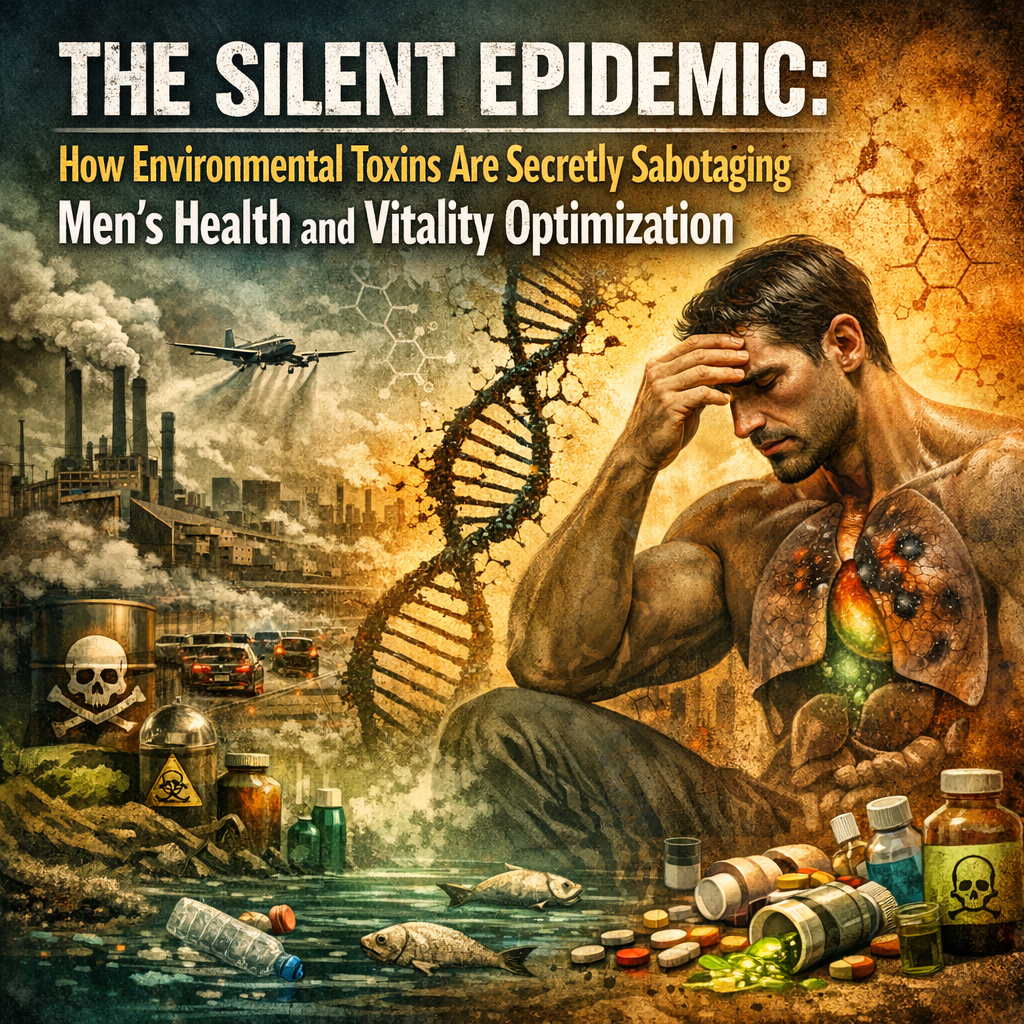
The Silent Epidemic: How Environmental Toxins Are Secretly Sabotaging Men’s Health and Vitality Optimization
Introduction
In today’s fast-paced world, **men’s health** stands at a delicate balance, influenced by various factors. While diet, exercise, and **genetics** are well-known influences, environmental toxins are a silent, often overlooked threat. These toxins, found in air, water, and consumer products, can significantly affect men’s **reproductive health**, **cognitive function**, and **longevity**. Examples include phthalates, which disrupt **hormonal balance**, and lead, which can cause neurological issues. The consequences often masquerade as natural aging. Men, from teenagers to seniors, must understand and address the pervasive impact of **environmental toxins** to optimize health and vitality throughout their lives.
Features
Scientific research provides clarity on the impact of environmental toxins on men’s health. A study in the [Environmental Health Perspectives journal](https://ehp.niehs.nih.gov) indicates that about 95% of human exposure to **dioxins**, harmful pollutants, occurs through the food chain. These toxins can impair **reproductive health** and hormonal function, leading to lower sperm counts and increased risks of **cancers**.
Another critical study from the [Journal of Clinical Endocrinology & Metabolism](https://academic.oup.com/jcem) explores the effects of endocrine disruptors like **bisphenol A (BPA)**, found in plastic containers, which can mimic estrogen and cause hormonal imbalances in men, leading to **infertility** and **metabolic disorders**.
Additionally, the [American Heart Association](https://www.ahajournals.org) reports that heavy metals like **lead** and **mercury** can harm **cardiovascular health**, causing hypertension and heart attacks. Even low lead exposure increases mortality risk from cardiovascular diseases.
Research published in [JAMA Psychiatry](https://jamanetwork.com/journals/jamapsychiatry) highlights how pollution, including particulate matter and volatile organic compounds, affects cognitive health, increasing risks of **depression** and other mental disorders—key concerns for overall health optimization.
Conclusion
The infiltration of environmental toxins into daily life calls for heightened awareness and proactive strategies for all ages. While evidence underscores significant risks, it also opens pathways to health protection through informed choices. This involves policy advocacy, product selection, and integrating detoxification strategies via diet and lifestyle. Although silent, toxins are not inevitable. A trifecta of **knowledge**, awareness, and action can protect and optimize health and vitality across generations. As research evolves, maximizing well-being through understanding these **substances** remains paramount.
References
1. [Dioxins and Their Effects on Human Health](https://www.who.int/news-room/fact-sheets/detail/dioxins-and-their-effects-on-human-health). World Health Organization.
2. Stahlhut, R. W., et al. (2007). [Concentrations of Urinary Phthalate Metabolites Are Associated with Increased Waist Circumference and Insulin Resistance in Adult U.S. Males](https://ehp.niehs.nih.gov). Environmental Health Perspectives.
3. Hauser, R., et al. (2004). [The relationship between human semen parameters and environmental exposure to polychlorinated biphenyls and p,p′-DDE](https://ehp.niehs.nih.gov). Environmental Health Perspectives.
4. Wu, T., et al. (2013). [Association between lead exposure and mortality: a meta-analysis of the published literature](https://www.ahajournals.org). American Heart Association.
5. Attademo, L., et al. (2019). [Occupational Air Pollution and Depressive Symptoms: A Review of the Literature](https://jamanetwork.com/journals/jamapsychiatry). JAMA Psychiatry.
**Concise Summary:**
The rapid pace of modern life brings unique challenges to men’s health, with environmental toxins often being an underestimated threat. These toxins, found in everyday surroundings, impact everything from reproductive health to cognitive function. Men are particularly susceptible to endocrine disruptors like BPA and heavy metals like lead and mercury, with proven links to various health issues. Understanding these impacts is crucial for health optimization. Increasing awareness and taking proactive steps to limit exposure and bolster the body’s resilience are essential actions in safeguarding men’s long-term health and vitality.

Dominic E. is a passionate filmmaker navigating the exciting intersection of art and science. By day, he delves into the complexities of the human body as a full-time medical writer, meticulously translating intricate medical concepts into accessible and engaging narratives. By night, he explores the boundless realm of cinematic storytelling, crafting narratives that evoke emotion and challenge perspectives. Film Student and Full-time Medical Writer for ContentVendor.com