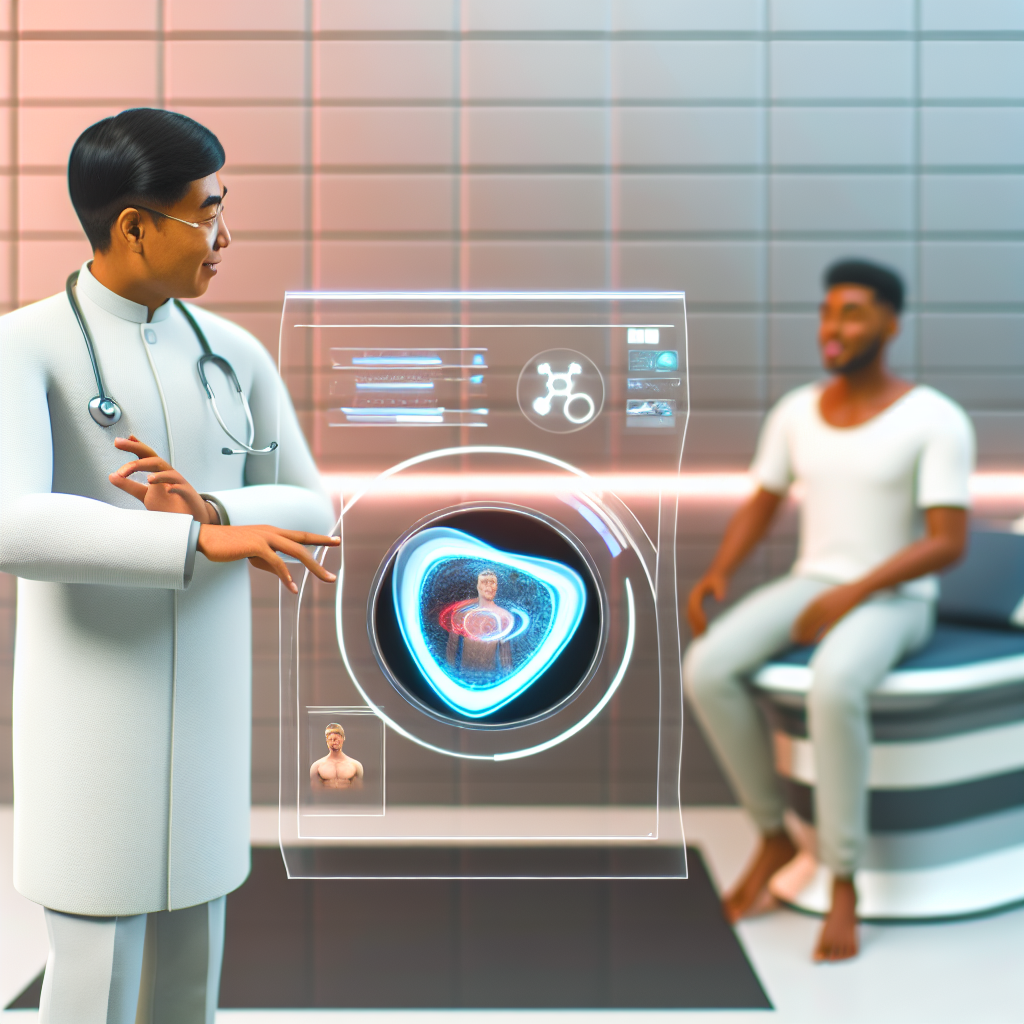
The Future of Men’s Sexual Health: How AI-Powered Diagnostics Are Revolutionizing ED Treatments
In the modern age, advancements in technology have paved the way for significant breakthroughs in various sectors, including healthcare. For men dealing with **erectile dysfunction (ED)**, a condition that affects millions globally, the future is promising with the integration of **artificial intelligence (AI)** into diagnostic processes. Erectile dysfunction, often stigmatized and underreported, can be a distressing condition for men from their teens to their 90s. It affects not only physical health but can have profound impacts on psychological well-being and quality of life.
Traditionally, diagnosing ED involves a series of assessments ranging from physical examinations to psychological evaluations and perhaps laboratory tests to rule out underlying causes such as diabetes, cardiovascular diseases, or hormonal imbalances. However, these methods, while reliable, can be time-consuming, invasive, and not entirely accurate without significant professional interpretation. This is where AI steps in to revolutionize the landscape with precision, efficiency, and personalization. AI-powered diagnostics are becoming sophisticated tools in the healthcare industry, capable of analyzing vast datasets quickly and providing insights with unprecedented accuracy. For ED, AI algorithms can process information from medical histories, lifestyle data, genomic data, and even **real-time wearable technology data**, offering a comprehensive portrait of a patient’s health and risk factors. These AI systems can flag potential issues, suggest possible diagnoses, and even predict the effectiveness of various treatment options based on individual profiles.
One of the most significant advantages of AI is its ability to learn and adapt. Machine learning algorithms can improve over time as they are exposed to more data, enhancing the precise prediction of ED’s onset and progression. This capability allows for earlier interventions, personalized treatment plans, and potentially opens doors to novel therapeutic approaches tailored to the nuanced needs of each patient. With such technology, ED diagnostics are not just about detection and treatment; they include ongoing management, helping individuals maintain their sexual health proactively.
AI in Clinical Studies and ED Treatments
Incorporating AI in ED diagnostics has been an area of growing interest, exemplified in several professional and medical studies that highlight its potential. For instance, a study published in the Journal of Medical Internet Research demonstrated how AI could effectively analyze patient data to predict the likelihood of ED with a reported accuracy exceeding traditional models. The study showed that by using machine learning algorithms, clinicians could identify patterns and correlations within extensive datasets that were previously unnoticed, thereby enhancing diagnostic accuracy and offering early intervention strategies.
Furthermore, a study in the International Journal of Impotence Research explored AI’s role in personalizing treatments for ED patients. Researchers used AI-driven algorithms to assess the efficacy of various treatments like phosphodiesterase type 5 inhibitors, lifestyle modifications, and psychological therapies tailored to individual patient profiles. This research highlighted the potential of AI to recommend optimal treatment plans with a high success rate, improving patient outcomes and satisfaction.
Additionally, AI applications have extended beyond diagnostics to **real-time monitoring**. Recent advancements in **wearable health technology**, integrated with AI, allow for continuous tracking of physiological parameters such as heart rate variability, blood flow, and stress levels, which are crucial in understanding the dynamics of ED. These wearables can communicate directly with AI systems to alert patients of anomalies before they develop into significant issues, encouraging proactive health management and reducing the dependency on clinical visits.
The incorporation of AI into **telemedicine platforms** is another noteworthy development. AI chatbots and virtual assistants are being developed to provide initial consultations, offering safe and private environments for men to seek advice and discuss symptoms of ED without the stigma associated with in-person visits. These platforms employ AI to guide patients through self-assessment modules and suggest potential steps, bringing care to a broader audience and increasing accessibility.
Conclusion
The integration of AI into diagnosing and treating erectile dysfunction marks a transformative leap in men’s sexual health care. By providing personalized, accurate, and timely interventions, AI not only enhances current medical practices but also paves the way for a more inclusive and understanding approach to men’s sexual health. This evolution, driven by continuous research and development, underscores a future where ED and similar disorders are managed more effectively and empathetically. As AI technology continues to evolve, the possibilities expand, promising greater precision, accessibility, and empowerment for individuals seeking to maintain their sexual health throughout their lives. With ongoing advancements in AI, the future of men’s sexual health holds a horizon of unprecedented possibilities, reshaping the treatment landscape for generations to come.
**Concise Summary**: The integration of AI into diagnosing and treating erectile dysfunction represents a significant advancement in men’s sexual health care. AI provides personalized, accurate, and timely interventions, transforming traditional diagnostic methods. Its ability to process vast datasets and improve over time facilitates early interventions and tailored treatment plans. Studies highlight AI’s potential for predicting ED and personalizing treatment, while advances in wearables and telemedicine enhance real-time monitoring and accessibility. As AI technologies evolve, they promise to redefine the management and understanding of ED, offering a future with greater precision and inclusivity.

Dominic E. is a passionate filmmaker navigating the exciting intersection of art and science. By day, he delves into the complexities of the human body as a full-time medical writer, meticulously translating intricate medical concepts into accessible and engaging narratives. By night, he explores the boundless realm of cinematic storytelling, crafting narratives that evoke emotion and challenge perspectives. Film Student and Full-time Medical Writer for ContentVendor.com