The Role of Chrononutrition in Male Hormonal Health: How Meal Timing Can Boost Testosterone and Libido
Introduction
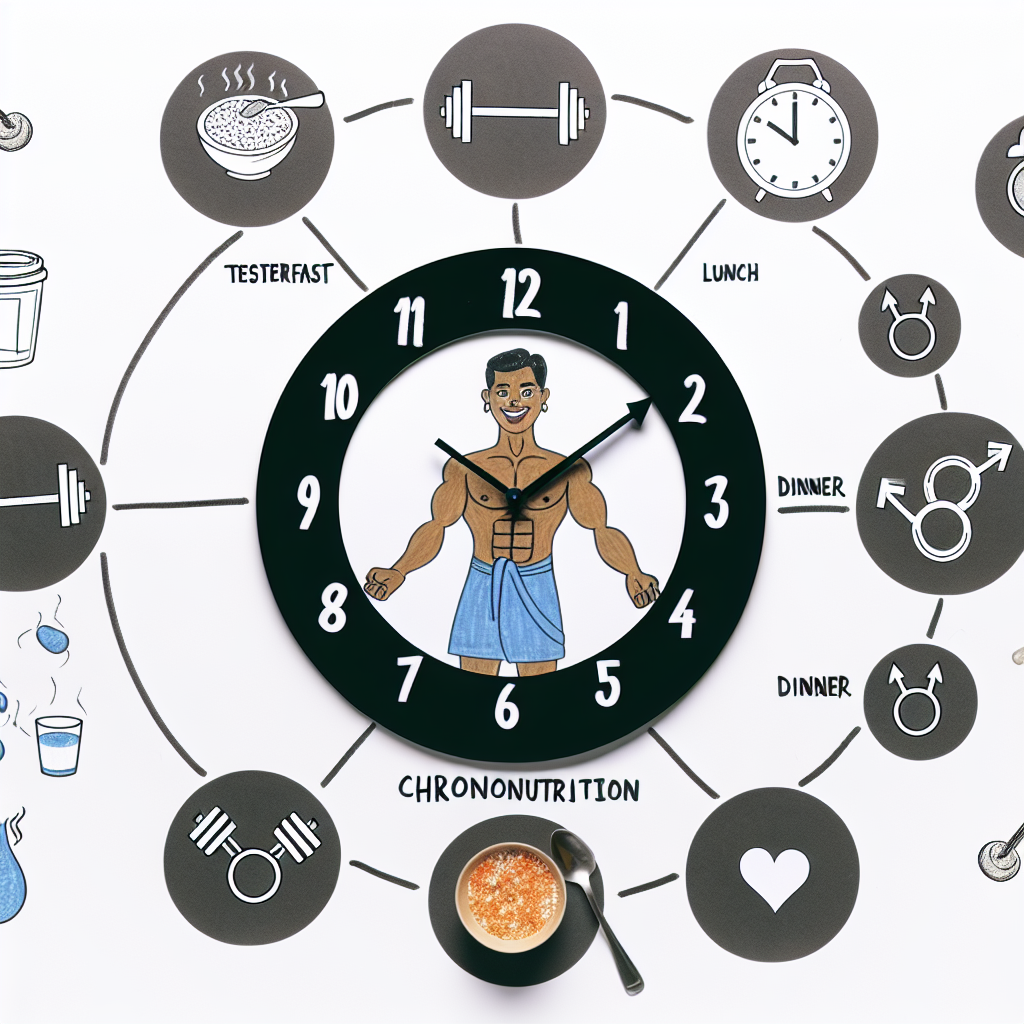
In recent years, the conversation around **male health** has embraced holistic and interdisciplinary approaches. Among these approaches, **chrononutrition** has emerged as a significant factor. It blends **nutrition science** with **circadian biology**, focusing on the ‘when’ of eating. For males, meal timing might be transformative in optimizing **hormonal health**, particularly for **testosterone levels** and **libido**.
Understanding the biochemical mechanisms that regulate **testosterone** is crucial. Testosterone, essential for **male fertility** and **muscle mass**, is influenced by **diet**, **exercise**, **sleep**, and **stress**. Research suggests meal timing significantly impacts these hormones. While calorie content and nutritional quality are essential, chrononutrition asserts that when we eat can synchronize or disturb hormonal production, affecting well-being.
Morning signifies more than the day’s start. Testosterone levels peak early in the morning. Fasting or consuming low-energy foods could reduce these levels. Late-night eating disturbs metabolic processes and circadian rhythm, potentially dampening testosterone production. Therefore, aligning eating habits with the body’s natural clock could promote long-term male health.
Moreover, the implications of chrononutrition extend beyond testosterone. **Insulin sensitivity**, **leptin**, and **cortisol rhythms**, influential to libido, are affected by meal timing. With cultural norms, work lifestyles, and personal preferences impacting dietary routines, striking a balance is crucial. As we delve deeper, scientific studies corroborate these findings and suggest strategically modifying eating patterns for better hormonal health.
Features
Several pioneering studies highlight the interplay between meal timing and hormonal health. A study by the [University of Murcia in Spain](https://www.sciencedirect.com/science/article/pii/S2352154620300518) showed that restricting energy intake earlier enhances insulin sensitivity, crucial for testosterone production. Participants who consumed more calories during breakfast showed improved metabolic markers compared to those who ate bigger dinners. This underscores how eating patterns can prime hormonal equilibrium.
Another [study published in *Obesity*](https://onlinelibrary.wiley.com/doi/abs/10.1002/oby.21396) by Harvard University examined how meal timing affects weight and metabolism, indirectly influencing male hormones. Participants who ate later experienced weight gain and decreased testosterone levels. Aligning meal timing with the body’s rhythm enhances metabolic rates and hormonal functions.
Exploring **libido**, the relationship between chrononutrition and sexual health is intriguing. A study in [*Chronobiology International*](https://www.tandfonline.com/doi/abs/10.3109/07420528.2015.1041599) highlights how delayed eating disrupts clock genes regulating hormone release. Ensuring sync between our diet and internal clock is crucial for maintaining a healthy libido.
These studies emphasize a shift in male health strategies. While traditional methods focused on what foods to eat, chrononutrition suggests “when” is just as vital. With scientific evidence, males can optimize their routines, from breakfast to dinner, knowing timing is pivotal in hormone optimization.
Conclusion
Chrononutrition offers an opportunity for males to enhance hormonal health through meal timing. As research continues, integrating these insights into daily life could significantly improve testosterone levels, well-being, and libido. While maintaining nutritional quality is fundamental, adapting to biological timing may be a game-changer in personal health management.
As you embrace chrononutrition, consider the broader lifestyle context. Combine meal timing with balanced nutrition, exercise, and rest. Whether you’re a teen or in your 90s, the complexity of when you eat alongside what you eat can lead to a more vibrant, healthy life. For optimal results, consult a healthcare provider or nutritionist for tailored chrononutrition strategies.
Summary: Chrononutrition, focusing on the timing of meals, is a growing field that combines nutrition science with circadian biology to optimize **male hormonal health**, specifically testosterone and libido. Studies indicate that meal timing significantly impacts hormonal production and overall well-being. Aligning meals with natural body rhythms, especially consuming higher calories during breakfast, can enhance insulin sensitivity, boost testosterone levels, and improve libido. Integrating meal timing with balanced nutrition and lifestyle habits, guided by healthcare professionals, can lead to improved health and vitality for men of all ages.
References:
1. [University of Murcia Study](https://www.sciencedirect.com/science/article/pii/S2352154620300518)
2. [Harvard University Study](https://onlinelibrary.wiley.com/doi/abs/10.1002/oby.21396)
3. [Chronobiology International Study](https://www.tandfonline.com/doi/abs/10.3109/07420528.2015.1041599)

Dominic E. is a passionate filmmaker navigating the exciting intersection of art and science. By day, he delves into the complexities of the human body as a full-time medical writer, meticulously translating intricate medical concepts into accessible and engaging narratives. By night, he explores the boundless realm of cinematic storytelling, crafting narratives that evoke emotion and challenge perspectives. Film Student and Full-time Medical Writer for ContentVendor.com