Why You Can’t Out-Meditate Low Testosterone: The Hidden Hormone Gap in Male High Performance
**Introduction**
In the relentless pursuit of peak **performance**, men are often bombarded with techniques and strategies promising to unlock their utmost **potential**. Among these, **meditation** has surged in popularity as a holistic method to boost **mental clarity**, alleviate **stress**, and enhance overall **well-being**. It’s touted as a powerful tool used by high achievers across different domains—from athletes to executives—in managing pressure and optimizing both mental and physical performance. But, what about the **physical underpinnings** that govern our capabilities, like **hormones**? Specifically, **testosterone**—the quintessential male hormone that significantly impacts physical strength, energy levels, and even mood.
**Testosterone** plays a crucial role far beyond its commonly acknowledged function in **sexual health**. It influences **muscle mass**, **bone density**, **fat distribution**, and **red blood cell production**. Therefore, adequate levels are imperative for sustaining energy, mental acuity, and emotional stability. Alarmingly, studies indicate that **testosterone levels** in men have been declining over the past few decades, posing a risk to various facets of health and performance (Travison et al., 2007).
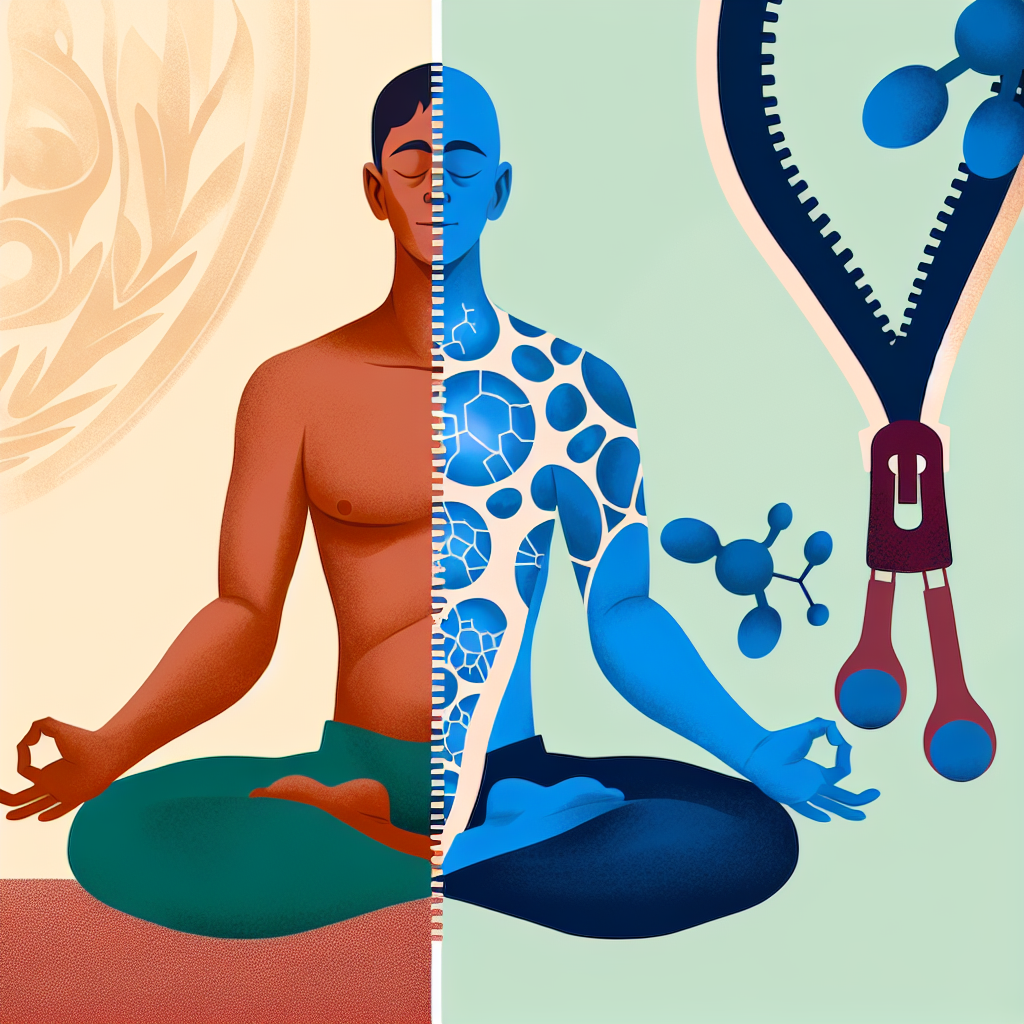
This prevalent issue becomes a roadblock, especially for those seeking high **performance**. While **meditation** offers undeniable benefits for stress reduction and mental health, it cannot rectify hormonal imbalances that may underlie reduced physical performance and stamina. In this context, understanding the subtle intersections between psychological tools like meditation and physiological necessities like testosterone is vital. Striking the right balance between inner calm and hormonal wellness might just be the key to unlocking sustained performance improvements.
Features
Several studies have highlighted the multifaceted role of **testosterone** beyond traditional sexual health parameters. A study by Harman et al. (2001) demonstrates how testosterone influences major physiological processes that are crucial for sustaining energy and performance. Low testosterone levels have been associated with symptoms such as fatigue, depression, and decreased motivation, directly impacting an individual’s capability to perform at their best.
Moreover, a comprehensive review by Wang et al. (2000) underlines that testosterone supplementation in hypogonadal men (those with abnormally low testosterone levels) results in substantial improvements in muscle strength and body composition. These improvements can theoretically contribute to heightened physical performance akin to increasing the top speed of a vehicle. However, this supplementation is not advised without proper medical supervision due to potential side effects.
Interestingly, a narrative review by Geniole et al. (2020) examines the relationship between testosterone and risk-taking among men. While higher testosterone levels can correlate with increased risk-taking behavior—which in certain contexts might enhance competitive edge—this does not imply that more is always better. Balance remains crucial, as excessively high levels could lead to adverse effects on mental health and decision-making processes.
It’s essential to reach a state where **meditation** and mindfulness practices serve as tools to enhance mental capacity and stress management, complementing a robust physiological foundation supported by healthy testosterone levels.
Conclusion
In conclusion, the journey to high performance is a multifaceted endeavor that requires attention to both mental and physical health. While **meditation** is a powerful tool that promotes mental clarity and stress management, it cannot serve as a standalone solution for those facing low testosterone levels. Addressing this hidden hormone gap necessitates a comprehensive approach, including regular health check-ups, lifestyle adjustments, and potentially medical interventions under medical guidance to ensure hormonal balance. Encouraging men to take a proactive stance on their health will empower them to repair the unseen gaps that might be limiting their performance, ensuring that both mind and body are aligned towards achieving their highest potential.
**References**
1. Travison, T. G., Araujo, A. B., O’Donnell, A. B., Kupelian, V., & McKinlay, J. B. (2007). A population-level decline in serum testosterone levels in American men. The Journal of Clinical Endocrinology & Metabolism, 92(1), 196-202. [Link](https://academic.oup.com/jcem/article/92/1/196/2596327)
2. Harman, S. M., Metter, E. J., Tobin, J. D., Pearson, J., & Blackman, M. R. (2001). Longitudinal effects of aging on serum total and free testosterone levels in healthy men. The Journal of Clinical Endocrinology & Metabolism, 86(2), 724-731. [Link](https://academic.oup.com/jcem/article/86/2/724/2844558)
3. Wang, C., Cunningham, G., Dobs, A., Iranmanesh, A., Matsumoto, A. M., Snyder, P. J., & Weber, T. (2000). Long-term testosterone gel (AndroGel) treatment maintains beneficial effects on sexual function and mood, lean and fat mass, and bone mineral density in hypogonadal men. The Journal of Clinical Endocrinology & Metabolism, 85(8), 2839-2853. [Link](https://academic.oup.com/jcem/article/85/8/2839/2866335)
4. Geniole, S. N., Bird, B. M., Ruddick, E. L., & Carré, J. M. (2020). Effects of testosterone administration on threat and reward-related neural network function in social anxiety disorder. Translational Psychiatry, 10(1). [Link](https://www.nature.com/articles/s41398-020-0813-6)
**Concise Summary**
The article reveals the crucial role of **testosterone** in men’s physical performance, which cannot be fully compensated by **meditation** alone. Low testosterone levels, linked to declining male hormone levels in recent decades, impede performance despite meditation’s benefits. To bridge this gap, a balanced approach integrating both psychological and physiological health is essential. Regular health check-ups, lifestyle adjustments, and potentially supervised medical interventions for hormone balance are crucial. Aligning mental and physical wellness can empower men to achieve peak performance, highlighting the necessity of proactive health management.

Dominic E. is a passionate filmmaker navigating the exciting intersection of art and science. By day, he delves into the complexities of the human body as a full-time medical writer, meticulously translating intricate medical concepts into accessible and engaging narratives. By night, he explores the boundless realm of cinematic storytelling, crafting narratives that evoke emotion and challenge perspectives. Film Student and Full-time Medical Writer for ContentVendor.com