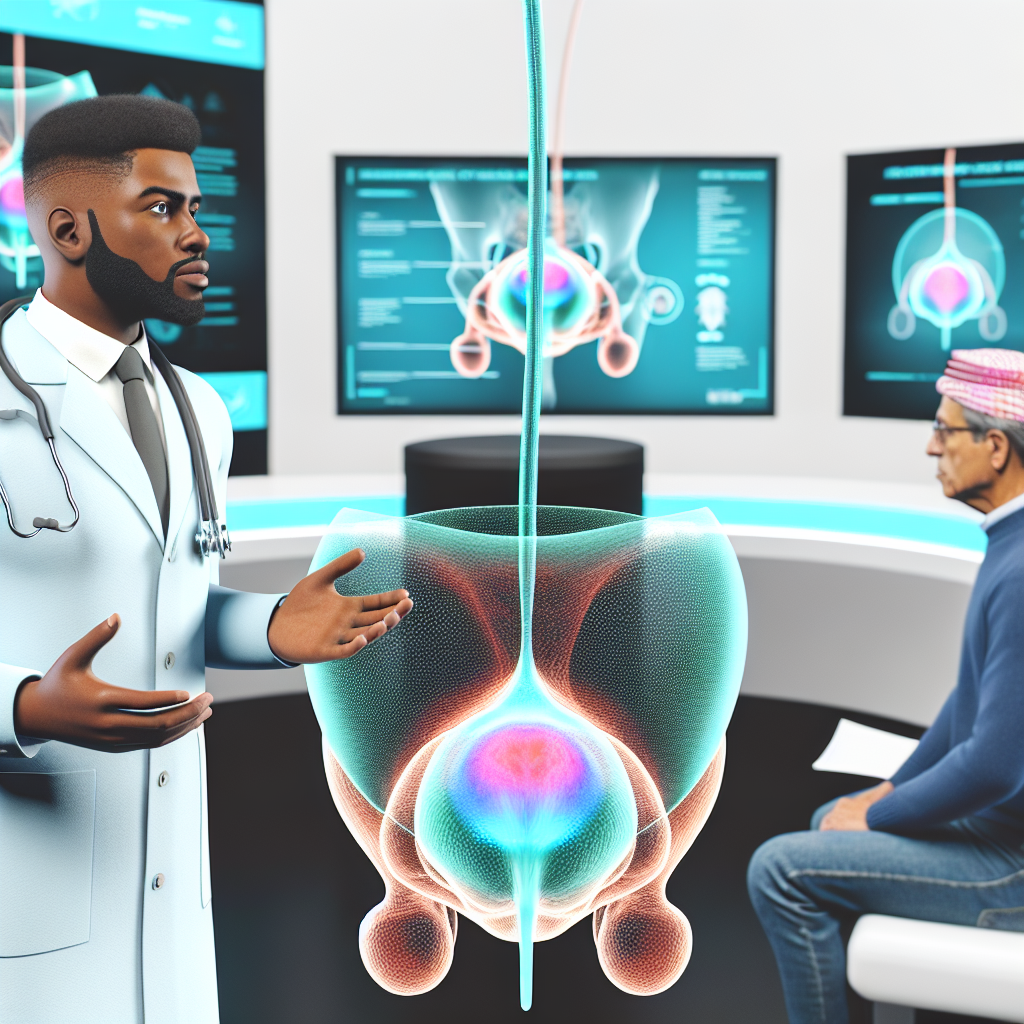
Modern Prostate Screening Technologies
Introduction
**Prostate health** is a significant concern for men, particularly as they age. The **prostate**, a small gland located below the bladder, plays a crucial role in male reproductive health by producing seminal fluid. However, it is also prone to health issues, with **prostate cancer** being one of the most common cancers among men in the United States. According to the [American Cancer Society](https://www.cancer.org/cancer/prostate-cancer.html), about one in eight men will be diagnosed with prostate cancer during his lifetime. Given this prevalence, effective screening is crucial.
Traditionally, **prostate screening** has involved two primary methods: the **prostate-specific antigen (PSA)** blood test and the **digital rectal exam (DRE)**. The PSA test measures the level of PSA, a protein produced by both cancerous and non-cancerous tissue in the prostate. While these methods have been helpful, they are not without limitations. High PSA levels can sometimes lead to false positives, resulting in unnecessary biopsies and anxiety. On the other hand, DRE is considered uncomfortable and less precise.
In recent years, advances in technology have introduced more precise and less invasive screening methods. These innovations aim to improve accuracy, reduce unnecessary interventions, and provide peace of mind to patients. Modern prostate screening technologies leverage the power of **advanced imaging**, **genetic testing**, and **artificial intelligence**, transforming how prostate health is monitored. This evolution in screening methodologies has sparked a paradigm shift in the early detection and management of prostate cancer.
For young men and seniors alike, understanding these advanced options is essential. Staying informed about the latest screening technologies can empower individuals to make educated decisions about their health. In this article, we delve into the contemporary innovations in prostate screening, exploring the scientific advancements and professional studies that underline these modern techniques.
Features
Recent advancements in **prostate cancer screening technologies** have marked a significant shift towards more personalized and precise approaches. One notable innovation is the use of **multi-parametric MRI (mpMRI)**. This imaging technique provides a more detailed picture of the prostate than traditional methods by combining different MRI sequences. A [2017 study](https://www.thelancet.com/journals/lancet/article/PIIS0140-6736(16)32401-1/fulltext) published in *The Lancet* demonstrated that mpMRI could detect clinically significant prostate cancer with higher precision, potentially reducing the number of unnecessary biopsies.
In addition to advanced imaging, **genomic testing** has emerged as a pivotal tool in prostate cancer risk assessment. Genetic tests analyze specific biomarkers associated with prostate cancer risk, helping to tailor screening and treatment plans. A research study published in [*European Urology*](https://www.europeanurology.com/article/S0302-2838(18)30485-4/fulltext) highlighted that genomic testing could stratify patients based on their risk level, contributing to more personalized management strategies.
**Artificial intelligence (AI)** is also transforming prostate screening. AI algorithms can analyze vast amounts of medical imaging data to identify patterns that might be missed by the human eye. A study conducted at the [University of California, Los Angeles](https://www.uclahealth.org/news/ucla-developed-artificial-intelligence-finds-prostate-cancer) showed that AI-assisted imaging could improve prostate cancer detection rates while reducing false positives.
Moreover, new blood tests, such as the **Prostate Health Index (PHI)** and **4Kscore**, offer alternatives to traditional PSA testing. These tests combine multiple biomarkers to improve the accuracy in detecting aggressive prostate cancer. Research published in the [*Journal of Urology*](https://www.auajournals.org/doi/10.1097/jju.0000000000000776) found that these tests could provide more reliable insights into whether a biopsy is necessary, minimizing unnecessary procedures.
These advances collectively represent a shift towards **precision medicine** in prostate care, reflecting an understanding that not all prostate cancers are created equal. Men can now benefit from more tailored screening strategies, leading to better outcomes and reduced anxiety.
Conclusion
Modern **prostate screening technologies** are reshaping the prostate cancer landscape, offering men more precise and less invasive options. As these technologies continue to evolve, they provide an opportunity to catch prostate issues earlier and reduce unnecessary interventions. For men across all age groups, staying informed about these advancements is crucial for making proactive health decisions.
Embracing cutting-edge options like **mpMRI**, **genomic testing**, **AI**, and novel blood tests could revolutionize how men approach prostate screenings. By moving towards individualized care, these modern technologies promise not only to enhance early detection but also to improve the quality of life for countless men. As always, staying informed and consulting with healthcare providers will ensure the best approach for individual health needs.
**Concise Summary:**
Modern prostate screening, an essential advancement for prostate health, leverages **mpMRI**, **genomic testing**, **AI**, and novel blood tests like **PHI** and **4Kscore** to enhance early detection and reduce unnecessary interventions. These technologies signify a shift to more personalized, less invasive screening methods, improving accuracy and reducing false positives in prostate cancer detection. As these innovations evolve, they promise better outcomes and peace of mind for men, meriting attention from individuals seeking proactive health management. Staying informed and consulting healthcare providers ensures tailored approaches to personal health needs.

Dominic E. is a passionate filmmaker navigating the exciting intersection of art and science. By day, he delves into the complexities of the human body as a full-time medical writer, meticulously translating intricate medical concepts into accessible and engaging narratives. By night, he explores the boundless realm of cinematic storytelling, crafting narratives that evoke emotion and challenge perspectives. Film Student and Full-time Medical Writer for ContentVendor.com