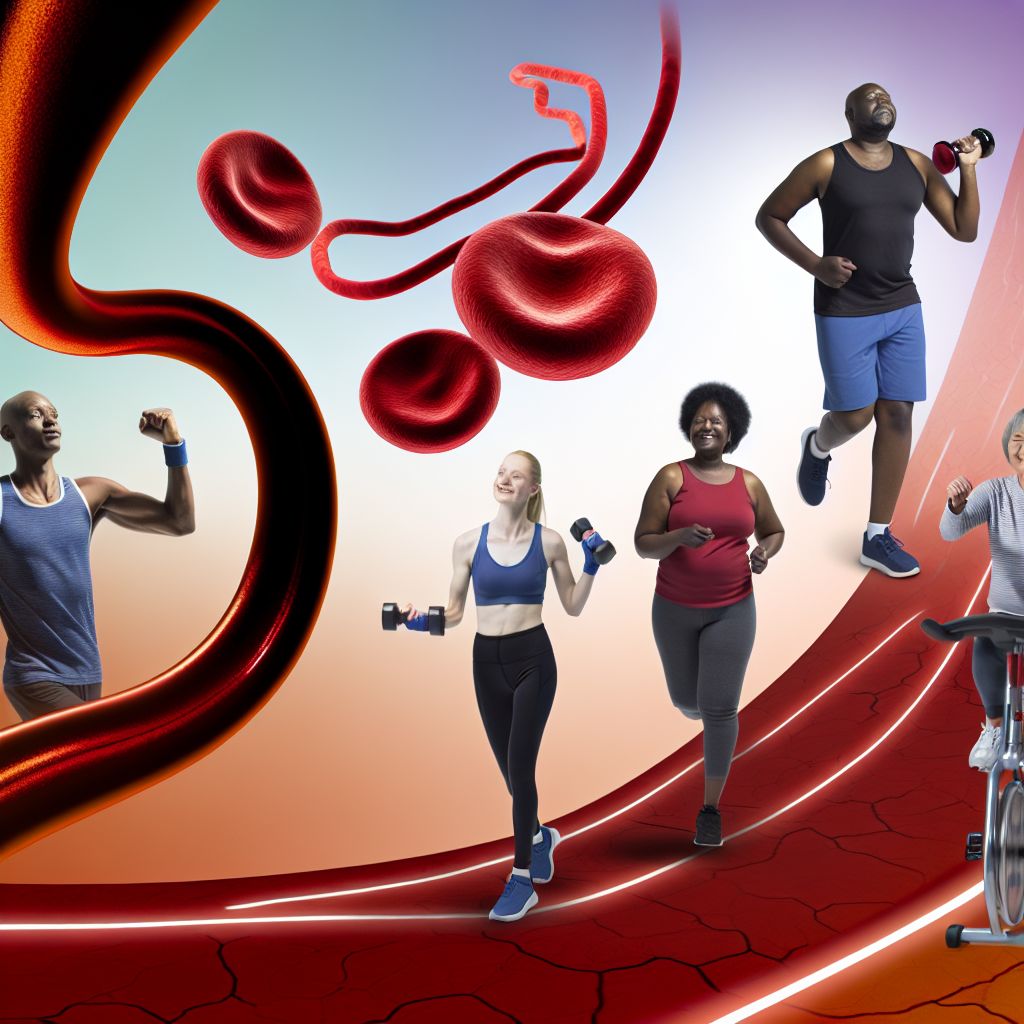
Exercise Prescription for ED: Workouts for Blood Flow
Introduction
**Erectile Dysfunction (ED)** affects **millions of men** across various age groups, not just the older population. While a prevalent belief exists that age alone is the leading cause of ED, factors such as **lifestyle**, **diet**, and overall **health** play significant roles. Men from their teenage years to their nineties can be affected by this condition. It’s essential to address ED not just from a medical standpoint but also through effective lifestyle changes. One such promising intervention is **exercise**, which can improve **blood flow**—a critical factor in achieving and maintaining an erection.
The connection between ED and ***poor blood flow*** is well-documented. Blood flow is crucial as it delivers essential nutrients and oxygen to tissues throughout the body, including the penile tissues. When blood flow is restricted due to conditions like **hypertension**, **atherosclerosis**, or general poor health habits, ED can be one of the resultant symptoms. The positive impact of exercise on cardiovascular health indirectly suggests a beneficial outcome for ED symptoms as well.
Increasingly, healthcare professionals are prescribing exercise as a first-line remedy for ED. Unlike pharmaceuticals, exercise targets the root issues related to **circulation** and **cardiovascular health** without the side effects commonly associated with medication. Furthermore, regular physical activity can lead to improved self-esteem, reduced stress, and better overall quality of life—all factors that positively influence sexual health.
**Cardio-based exercises**, **strength training**, and **flexibility workouts** can each contribute to boosting blood circulation. **Aerobic activities** such as running, swimming, and cycling elevate heart rate and increase blood circulation throughout the body. Strength training improves muscle tone and circulation efficiency, particularly when it involves major muscle groups. **Flexibility exercises** like yoga and Pilates enhance circulation by promoting relaxation and reducing stress levels.
Features
The link between exercise and improved **erectile function** has been explored in numerous studies. A notable study published in The American Journal of Cardiology found that men who engaged in regular physical activity had a significantly lower risk of developing ED. The research emphasized that even moderate exercise, such as walking briskly for 30 minutes five days a week, can lead to a 41% reduction in the risk of ED.
Another study in The Journal of Sexual Medicine highlighted how aerobic exercise can improve **erectile function** in men. The study involved men with ED participating in structured exercise programs over several months. After completing the programs, these individuals exhibited notable improvements in their erectile function scores.
Furthermore, strength training has been shown to have a positive impact on blood flow. According to research published in the Journal of Applied Physiology, resistance training can improve **endothelial function**, which plays a crucial role in vasodilation and blood flow. The improvement in endothelial function facilitates better circulation, which is directly beneficial for men suffering from ED.
Beyond general fitness, the role of targeted **pelvic floor exercises**—commonly known as **Kegel exercises**—has also been explored. A study from the British Journal of General Practice found that these exercises can improve erectile function by strengthening the muscles responsible for penile rigidity. Kegel exercises can be particularly beneficial when performed consistently and accurately as part of an intervention strategy.
In conclusion, the medical community recognizes exercise as a non-invasive, low-risk approach to managing and potentially alleviating the symptoms of ED. By promoting better blood flow and cardiovascular health, regular physical activity has emerged as an effective component of a comprehensive treatment plan for erectile dysfunction.
Conclusion
Exercise is an empowering tool in the fight against erectile dysfunction. While not a standalone cure, it forms an integral part of a holistic approach to managing ED, particularly for those willing to adopt healthier lifestyles. Coupled with medical interventions, dietary changes, and stress management, exercise offers promising results for improving **erectile function**.
By enhancing cardiovascular health, exercise facilitates better blood flow—the foundation for addressing many cases of ED. The commitment to a regular exercise regime can also offer broader health benefits, such as weight management, improved mood, and reduced anxiety—all factors known to contribute positively to **sexual health** and performance. Each step taken toward improved fitness is a stride toward better sexual health and overall well-being.
For men of all ages dealing with erectile dysfunction, particularly those seeking non-pharmaceutical strategies, exercise offers a practical, sustainable, and scientifically supported path forward. Beginning a journey toward better health, one that includes regular exercise, is a commitment not only to enhance sexual function but to embrace an overall healthier lifestyle.
Summary
Exercise is an effective, non-invasive approach to managing erectile dysfunction (ED) by improving blood flow and cardiovascular health. Regular physical activity, including cardio, strength training, and flexibility exercises, enhances circulation and can significantly reduce ED risk. Studies show that even moderate exercise, like brisk walking, can lead to a 41% risk reduction. Strength training and pelvic floor exercises further aid in erectile function improvement. Adopting an exercise regimen, complemented by lifestyle changes such as diet and stress management, provides a holistic strategy for managing ED and enhances overall health and well-being.

Dominic E. is a passionate filmmaker navigating the exciting intersection of art and science. By day, he delves into the complexities of the human body as a full-time medical writer, meticulously translating intricate medical concepts into accessible and engaging narratives. By night, he explores the boundless realm of cinematic storytelling, crafting narratives that evoke emotion and challenge perspectives. Film Student and Full-time Medical Writer for ContentVendor.com