Biohacking Male Physiology Beyond Testosterone – Unlocking the Power of Cellular Longevity for Lasting Vitality
Introduction
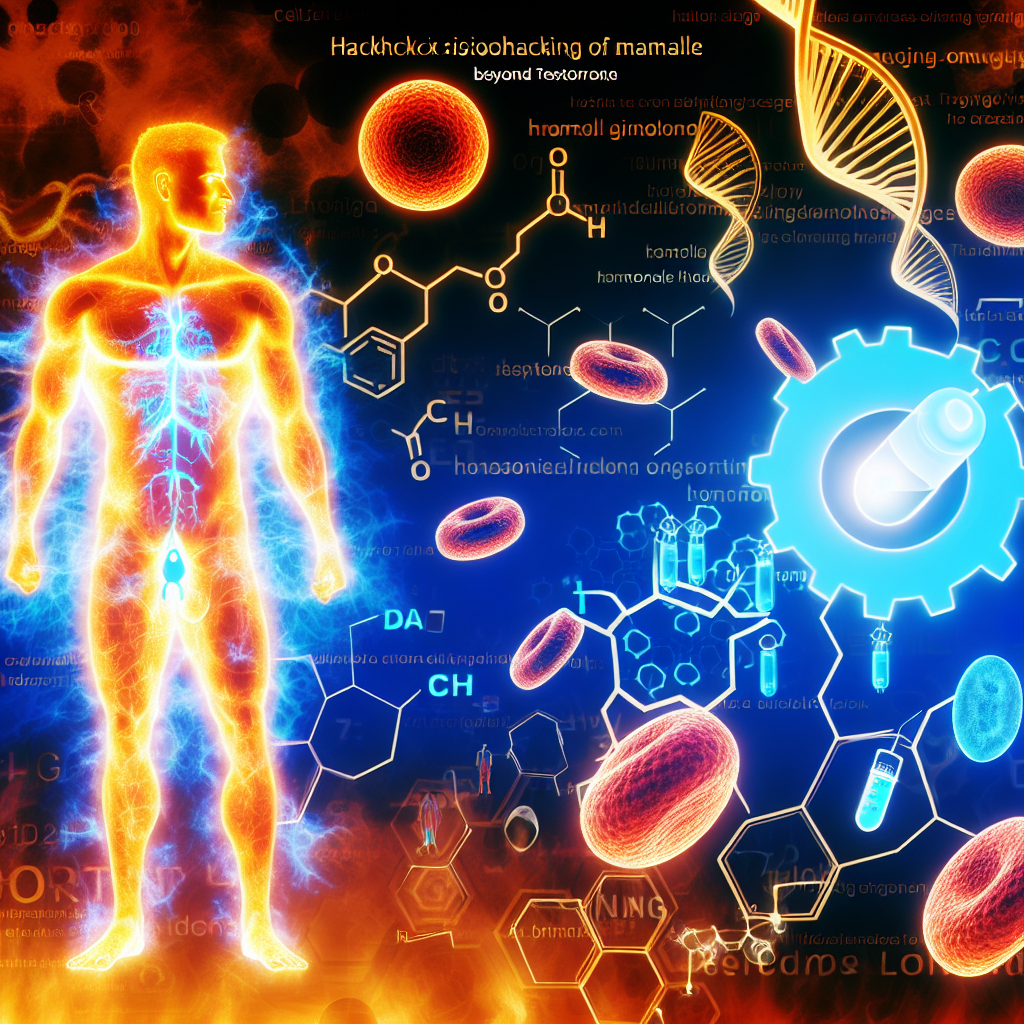
In recent years, discussions about male health have often revolved around **testosterone**, the hormone traditionally linked to **vitality**, strength, and masculinity. While maintaining optimal testosterone levels is crucial, focusing solely on this hormone oversimplifies the complex landscape of male **physiology**. Emerging research suggests that **cellular health**, particularly the mechanisms behind **cellular longevity**, plays an equally important role in achieving lasting **vitality**. **Biohacking**, a practice that involves making small, systematic changes to optimize one’s biology, provides a promising framework for men who wish to go beyond testosterone and unlock their full potential.
**Biohacking** can encompass various strategies, including dietary adjustments, **nutritional supplementation**, exercise, sleep **optimization**, and mindfulness practices. For men ranging from teenagers to seniors in their 90s, these strategies can be fine-tuned to enhance **cellular longevity**, which is pivotal in slowing the aging process, boosting energy levels, and enhancing physical and mental performance.
Central to **cellular longevity** are the **mitochondria**, the powerhouses of the cells. Mitochondria are crucial for **energy production** and play a role in cellular **repair** and growth. As we age, **mitochondrial function** tends to decline, impacting overall health and vitality. Biohacking approaches aim to preserve and even enhance mitochondrial function through interventions such as **intermittent fasting**, caloric restriction, and nutrient-rich diets high in **antioxidants**.
Another critical element in cellular longevity is the maintenance of **telomeres**, the protective caps at the ends of chromosomes. Telomeres shorten with each cell division, eventually leading to cell aging and death. Strategies such as **stress reduction**, regular **physical activity**, and specific supplements have shown promise in slowing the rate of telomere shortening, thereby extending cellular life.
Additionally, the regulation of pathways like **mTOR** and **AMPK** is significant for metabolic health and longevity. Targeting these pathways through lifestyle changes and certain nutraceuticals can activate **autophagy**, a process that removes damaged cells and supports cellular renewal. By focusing on these aspects, men can potentially achieve holistic health improvements beyond merely adjusting testosterone levels.
Features
Scientific studies have continued to illuminate the pathways and mechanisms through which cellular longevity can be promoted, providing valuable insights and practical applications for biohacking male physiology.
A study published in [“Nature Communications”](https://www.nature.com/articles/ncomms14063) explores the effects of **caloric restriction** on lifespan and cellular health. The research highlights how reduced calorie intake can enhance mitochondrial efficiency and prolong life expectancy by activating pathways like **AMPK**, which are crucial for cellular repair and energy balance.
Another pivotal area of research focuses on **telomere length** and its role in aging. Studies have demonstrated that lifestyle factors, particularly **stress management** and physical activity, significantly affect telomere length. A 2018 study in [“The Lancet”](https://www.thelancet.com/journals/lancet/article/PIIS0140-6736(18)31609-1/fulltext) showed that participants who engaged in regular stress reduction practices, such as mindfulness and meditation, had slower rates of telomere shortening and improved overall health.
**Mitochondrial health** has also been linked to various dietary components, including antioxidants found in fruits and vegetables, which help reduce **oxidative stress** and support cellular function. Research from the [“Journal of Nutrition”](https://academic.oup.com/jn/article/150/10/2747/5874193) underscores the importance of a diet rich in antioxidants, such as vitamins C and E, in maintaining mitochondrial efficiency and enhancing vitality.
Interventions targeting the **mTOR pathway** are gaining considerable attention. Inhibition of this pathway has been associated with increased longevity and improved cellular processes. A compelling study from [“Cell Metabolism”](https://www.cell.com/cell-metabolism/fulltext/S1550-4131(16)30403-9) revealed that intermittent fasting could effectively modulate mTOR activity, promoting autophagy and improving metabolic health in men.
As these studies suggest, integrating scientific insights into everyday practices offers a viable path for men seeking to optimize their health beyond traditional testosterone-focused approaches.
Conclusion
**Biohacking** male physiology by focusing on **cellular longevity** offers a multidimensional approach to achieving lasting vitality. By understanding and leveraging the science behind mitochondrial health, telomere maintenance, and key metabolic pathways, men can take proactive steps to optimize their overall well-being. These practices, supported by an evolving body of research, complement testosterone management and holistically contribute to enhanced physical and mental health. As scientific understanding deepens, the potential for biohacking to unlock new levels of male vitality continues to expand, offering a promising avenue for health and longevity in the 21st century. By embracing this approach, men of all ages can aspire to not only live longer but live better.
**Concise Summary**: The article highlights the importance of focusing beyond testosterone to optimize male health through biohacking. Essential strategies include enhancing cellular longevity by targeting mitochondrial health, telomere maintenance, and pathways like mTOR and AMPK. By adopting practices such as dietary changes, stress management, and exercise, men can achieve improved vitality and well-being. Scientific research underscores the benefits of interventions like intermittent fasting, antioxidant-rich diets, and stress reduction for cellular health, offering a holistic approach to male physiology.

Dominic E. is a passionate filmmaker navigating the exciting intersection of art and science. By day, he delves into the complexities of the human body as a full-time medical writer, meticulously translating intricate medical concepts into accessible and engaging narratives. By night, he explores the boundless realm of cinematic storytelling, crafting narratives that evoke emotion and challenge perspectives. Film Student and Full-time Medical Writer for ContentVendor.com