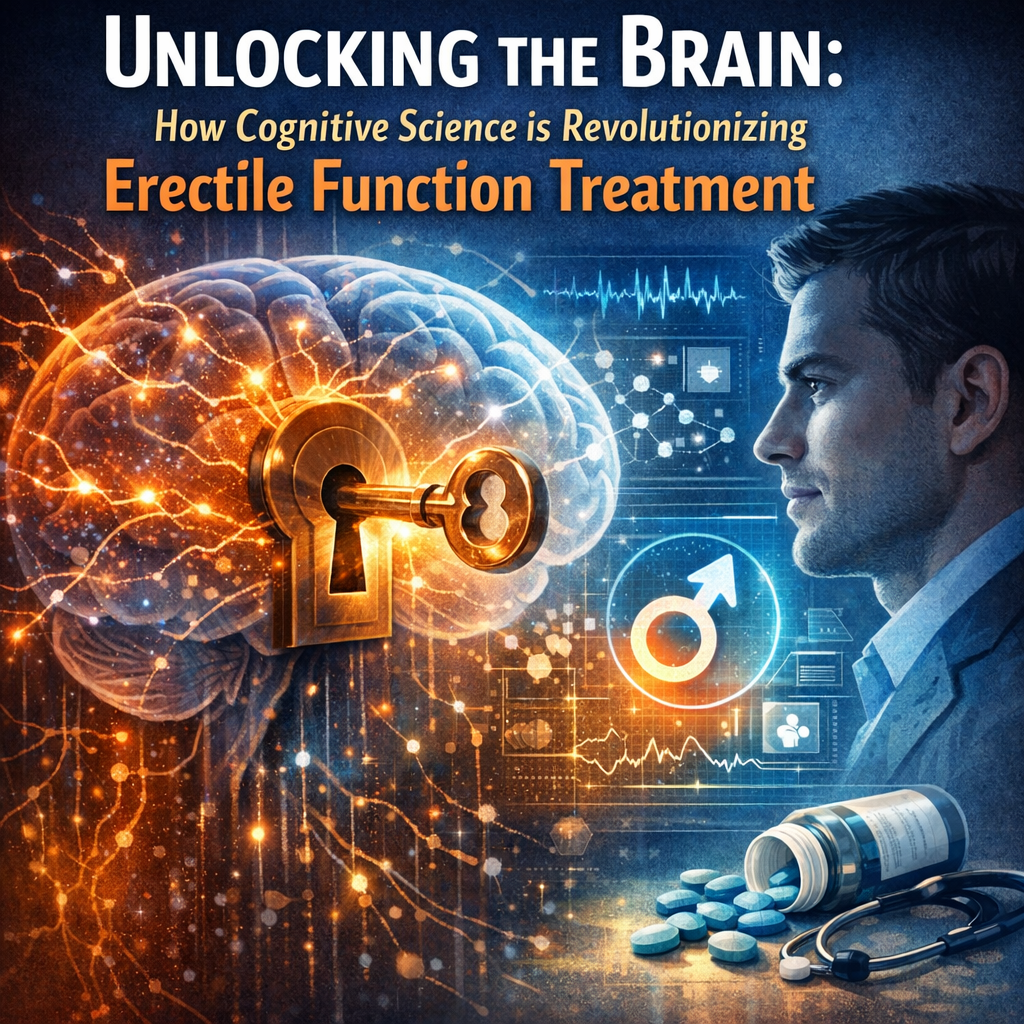
Unlocking the Brain: How Cognitive Science is Revolutionizing Erectile Function Treatment
Introduction
In recent years, the field of **cognitive science** has transcended traditional boundaries, finding its way into various aspects of medical treatment. One such area garnering significant attention is the treatment of **erectile function**, particularly as it relates to understanding the **cognitive processes** behind **sexual health**. **Erectile dysfunction** (ED) is a common concern among men, impacting over 30 million men in the United States alone. While often considered a physical issue, the **psychological aspects** of ED are increasingly acknowledged. Cognitive science, with its focus on understanding mental processes, offers promising insights into treating ED more effectively.
Historically, treatments for ED have predominantly focused on physical solutions, such as medications like **Viagra**, penile implants, or lifestyle changes. However, these approaches do not always address the underlying psychological and neurological factors that can contribute to ED. Cognitive science comes into play by examining how thoughts, emotions, and brain functions influence erectile function. Innovative research suggests that by harnessing the power of the mind, alongside traditional treatments, new possibilities can be unlocked for men experiencing ED.
**Mental health** conditions such as **depression**, **anxiety**, and **stress** are known contributors to erectile dysfunction. These psychological barriers can form a vicious cycle: anxiety about performance can lead to ED, which in turn can exacerbate anxiety. Cognitive science explores these barriers and seeks to dismantle them through targeted therapies and cognitive restructuring. Techniques such as **cognitive behavioral therapy (CBT)** and **mindfulness meditation** have shown promise in improving erectile function by reducing anxiety and enhancing overall mental well-being.
Moreover, advancements in **neuroimaging technologies** are paving the way for a better understanding of the brain’s role in **sexual arousal** and function. This knowledge enables medical professionals to develop more personalized treatment plans that address both mind and body. Through the integration of cognitive science and traditional medical practices, there’s tremendous potential to revolutionize ED treatment.
Features
Recent studies highlight the significance of cognitive science in understanding and treating **erectile dysfunction**. A notable study published in the [*Journal of Sexual Medicine*](https://www.jsm.jsexmed.org) delved into the impacts of cognitive interventions on ED. The research found that participants who underwent **cognitive behavioral therapy (CBT)** experienced significant improvements in **erectile function** compared to those who received only medication. CBT helps patients identify and change negative thought patterns related to sexual performance, reducing performance anxiety and promoting a healthier mental state conducive to **sexual function**.
Another compelling study from [*Nature Reviews Urology*](https://www.nature.com/nrurol/) explored the influences of **neuroimaging** on our understanding of erectile function. Researchers used functional MRI to observe brain activity during sexual arousal, uncovering key areas of the brain involved in **sexual response**. This technology offers insights into how psychological factors impact sexual arousal, allowing for more targeted and effective treatments.
**Mindfulness practices** also play a significant role in cognitive approaches to ED treatment. A systematic review published in [*Psychosomatic Medicine*](https://www.psychosomaticmedicine.org) evaluated the effects of mindfulness-based therapy on erectile dysfunction. The review concluded that men who engaged in regular mindfulness practices reported enhanced sexual satisfaction and reduced symptoms of ED. Mindfulness helps shift focus away from performance concerns and fosters a non-judgmental awareness of the present moment, which can alleviate anxiety associated with sexual performance.
In addition to mental health techniques, **biofeedback** is another cognitive science tool utilized in **ED treatment**. Biofeedback involves using electronic monitoring to train men to gain control over physiological functions that can impact erectile function. By learning to control physiological responses to stress, men can improve their ability to achieve and maintain erections, enhancing both their mental and physical sexual health.
Conclusion
The integration of **cognitive science** into **erectile function treatment** is a groundbreaking development that holds promise for millions of men facing the challenges of ED. By addressing both the psychological and physiological aspects of **erectile dysfunction**, this approach offers a more comprehensive and personalized treatment plan. Studies indicate that cognitive interventions such as **CBT**, **mindfulness**, and **neuroimaging** can effectively complement traditional ED treatments, offering hope for better outcomes and improved quality of life.
As research continues to evolve, it is essential for healthcare providers to stay informed about the latest cognitive science developments and incorporate these findings into patient care. Understanding the intricate link between the mind and body opens numerous possibilities for tackling **erectile dysfunction** from a holistic standpoint. This revolution in ED treatment marks a significant advancement in **men’s health**, emphasizing the importance of mental well-being in achieving optimal sexual health.
References
1. [Journal of Sexual Medicine](https://www.jsm.jsexmed.org) – Study on cognitive behavioral therapy for erectile dysfunction.
2. [Nature Reviews Urology](https://www.nature.com/nrurol/) – Research on neuroimaging and erectile function.
3. [Psychosomatic Medicine](https://www.psychosomaticmedicine.org) – Systematic review on mindfulness and erectile dysfunction.
Concise Summary
The integration of **cognitive science** into **erectile function treatment** is transforming how **erectile dysfunction (ED)** is understood and managed. This approach goes beyond traditional physical solutions, addressing the psychological components of ED through methods like **cognitive behavioral therapy (CBT)**, **mindfulness**, and **biofeedback**. These techniques help dismantle performance anxiety and provide enhanced, personalized care by understanding the brain’s role in sexual function through **neuroimaging**. This comprehensive approach offers new hope for millions of men by improving outcomes and emphasizing the importance of mental well-being in achieving **optimal sexual health**.

Dominic E. is a passionate filmmaker navigating the exciting intersection of art and science. By day, he delves into the complexities of the human body as a full-time medical writer, meticulously translating intricate medical concepts into accessible and engaging narratives. By night, he explores the boundless realm of cinematic storytelling, crafting narratives that evoke emotion and challenge perspectives. Film Student and Full-time Medical Writer for ContentVendor.com