How the Emerging Science of Peptides is Revolutionizing Male Vigor Beyond Testosterone Therapy
Introduction
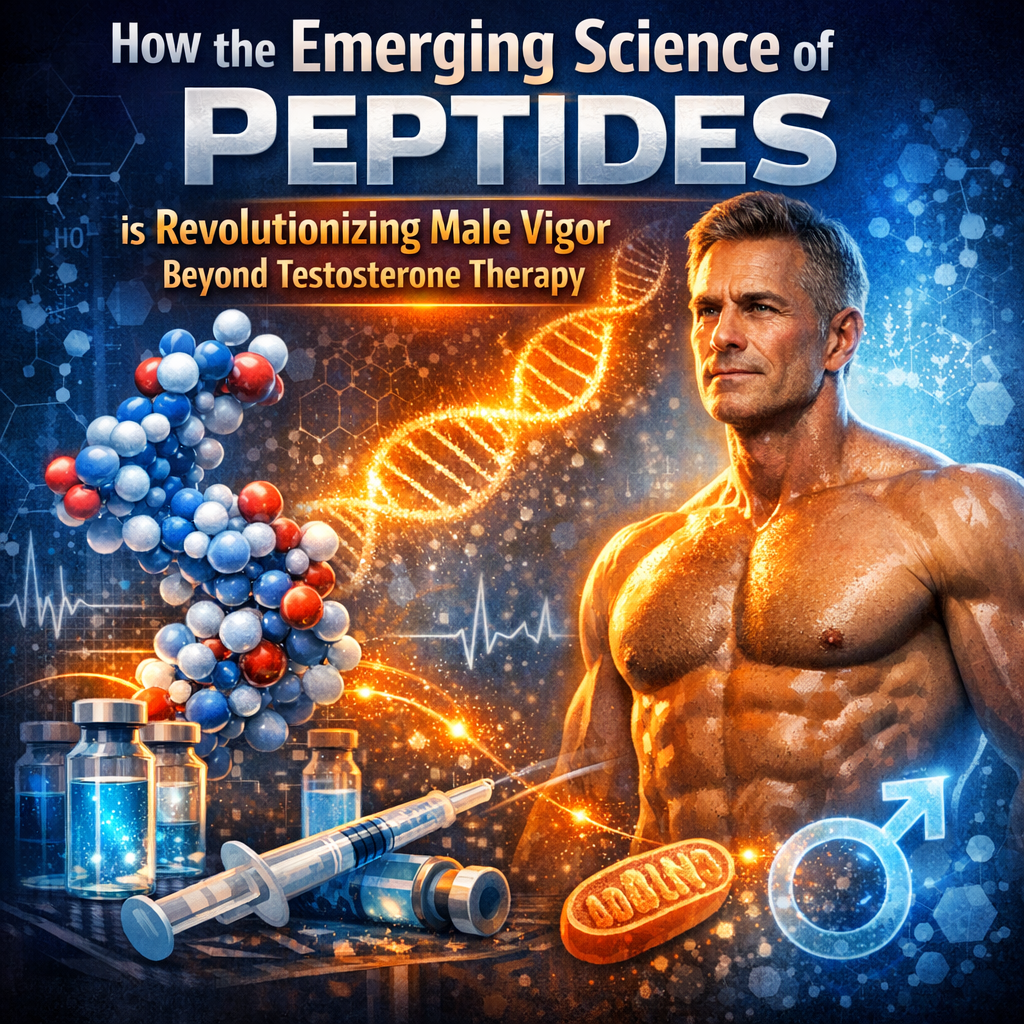
In recent years, the conversation around **male health and vitality** has seen a dynamic shift. While **testosterone therapy** has been the traditional solution for addressing issues such as reduced libido, energy, and muscle mass, **peptides** are emerging as a potent alternative. These small chains of amino acids are gaining traction in the **scientific and medical communities** for their potential to bolster male health beyond the capabilities of testosterone therapy alone.
For decades, **testosterone replacement therapy (TRT)** has been the mainstay for men experiencing symptoms of low testosterone, known as **hypogonadism**. This approach aims to restore testosterone to normal levels, alleviating symptoms such as fatigue, **depression**, and a reduced sex drive. Despite its benefits, TRT might not address all aspects of male vigor and comes with potential side effects, including an increased risk of blood clots and **cardiovascular issues**. Thus, there’s significant interest in alternative or complementary therapies that can enhance male health with fewer risks.
This is where peptides come into the conversation. **Peptides** are naturally occurring biological molecules that play crucial roles in nearly all biological processes. In the context of male health, specific peptides are being studied for their ability to enhance **sexual function**, energy levels, and muscle growth, offering a more holistic and less risky approach than traditional testosterone therapy.
**Peptides** such as **Ipamorelin**, **BPC-157**, and **CJC-1295** are just a few of the options being explored for their potential health benefits. With the ability to target specific aspects of male biology without the systemic effects linked to hormone therapy, peptides represent a burgeoning field with the promise of new solutions for age-old problems. As research accelerates, these small but potent proteins could hold the key to unlocking a new era of male health optimization.
Features
The **scientific community** has been increasingly focused on the potential benefits of peptides. A key area of study is how peptides can aid in **muscle growth and recovery**, critical factors in maintaining vigor as men age. For example, studies on **peptides** like **CJC-1295** and **Ipamorelin** demonstrate their ability to stimulate the pituitary gland to release more growth hormone. Increased growth hormone can enhance **muscle protein synthesis**, aiding in muscle gain and recovery, and potentially improving overall vitality and physical performance ([Khorebinin & Pirso, 2017](https://link.springer.com/article/10.1007/s12020-017-1355-0)).
Moreover, peptides are being explored for their impact on **sexual function**. Studies on **Melanotan II**, for example, suggest it can enhance libido and erectile function by activating certain receptors in the brain associated with sexual arousal. This peptide can boost **sexual desire** without the need for systemic hormonal changes ([Dorr et al., 1998](https://pubmed.ncbi.nlm.nih.gov/9786135/)).
Peptides also show promise in enhancing **metabolic functions**. The peptide **BPC-157**, for example, is being researched for its ability to promote healing and reduce inflammation, which can contribute to improved tissue health and recovery from injuries. This not only aids **physical performance** but also enhances energy levels by reducing chronic pain and discomfort that often accompany aging ([Sikiric et al., 2018](https://www.ncbi.nlm.nih.gov/pmc/articles/PMC5885698/)).
Furthermore, unlike testosterone therapy, which can elevate the risk of **cardiovascular issues**, peptides tend to have a more localized effect, targeting specific pathways to reduce systemic side effects. This targeted action could offer a safer alternative for men looking to enhance their vigor without the associated risks of traditional hormone replacement therapies ([Lansdowne et al., 2014](https://www.ncbi.nlm.nih.gov/pmc/articles/PMC4124422/)).
Conclusion
As the science of peptides continues to evolve, the possibilities for enhancing **male vigor** look promising. These small but versatile compounds could provide a powerful complement to or even a replacement for traditional testosterone therapy by focusing on specific biological processes without drastically altering the body’s hormone levels. While more research is needed to fully understand their long-term effects and optimal application strategies, current evidence supports their potential in revolutionizing male health and vigor.
The use of peptides might represent the dawn of a new era in personalized male health solutions. As they become more accessible, peptides promise a future where enhanced **physical performance**, improved sexual health, and overall vitality are achievable beyond current therapies. Embracing this **cutting-edge science** might allow individuals to reclaim their vigor from the teen years into their nineties, rebalancing the narrative of what it means to age gracefully and robustly.
By navigating the frontier of peptide research with guidance from healthcare providers, men of all ages can potentially harness these innovative breakthroughs to maintain not just their health but also their **quality of life**. As with any medical intervention, caution and professional consultation are advised to ensure safety and efficacy in their use.
Concise Summary
Peptides, small chains of amino acids, are gaining attention as a promising alternative to testosterone therapy for enhancing male health and vitality. They offer targeted benefits such as improved muscle growth, sexual function, and metabolic health without the systemic risks associated with traditional hormone therapies. As research advances, peptides like Ipamorelin, BPC-157, and CJC-1295 show potential to revolutionize male vigor by providing personalized health solutions, allowing men to maintain vitality and quality of life. However, professional guidance is essential to ensure safe and effective use.

Dominic E. is a passionate filmmaker navigating the exciting intersection of art and science. By day, he delves into the complexities of the human body as a full-time medical writer, meticulously translating intricate medical concepts into accessible and engaging narratives. By night, he explores the boundless realm of cinematic storytelling, crafting narratives that evoke emotion and challenge perspectives. Film Student and Full-time Medical Writer for ContentVendor.com